<?xml version="1.0" encoding="UTF-8"?>
<?xml-stylesheet type="text/xsl" href="/stylesheets/feed.atom.xml" media="screen"?>
<feed xml:lang="en-US" xmlns="http://www.w3.org/2005/Atom">
  <id>tag:graduateschool.nd.edu,2005:/news</id>
  <link rel="alternate" type="text/html" href="https://graduateschool.nd.edu"/>
  <link rel="self" type="application/atom+xml" href="https://graduateschool.nd.edu/news.atom"/>
  <id>tag:graduateschool.nd.edu,2005:/latest</id>
  <title>The Graduate School | News</title>
  <updated>2026-09-28T10:27:00-04:00</updated>
  <link rel="alternate" type="text/html" href="https://graduateschool.nd.edu/"/>
  <link rel="self" type="application/atom+xml" href="https://graduateschool.nd.edu//news.atom"/>
  <subtitle>The University of Notre Dame Graduate School attracts premier students to top degree programs where they pursue academic excellence and outstanding professional development within a culture of well-being.</subtitle>
  <entry>
    <id>tag:graduateschool.nd.edu,2005:News/185793</id>
    <published>2026-09-28T10:27:00-04:00</published>
    <updated>2026-09-28T10:27:47-04:00</updated>
    <link rel="alternate" type="text/html" href="https://graduateschool.nd.edu/news/five-early-career-scholars-form-second-arts-letters-cohort-of-prestigious-notre-dame-postdoctoral-fellowship-program/"/>
    <title>Five early-career scholars form second Arts &amp; Letters cohort of prestigious Notre Dame postdoctoral fellowship program</title>
    <summary type="text">
      <![CDATA[Five interdisciplinary scholars have joined the College of Arts &amp; Letters at the University of Notre Dame to continue their research, obtain invaluable support, and engage in professional development as part of the Provost’s…]]>
    </summary>
    <content type="html">
      <![CDATA[<p>Five interdisciplinary scholars have joined the <a href="http://al.nd.edu/">College of Arts &amp; Letters</a> at the University of Notre Dame to continue their research, obtain invaluable support, and engage in professional development as part of the <a href="https://al.nd.edu/research/centers-institutes-and-special-programs/provostpostdocs/">Provost’s Postdoctoral Fellowship Program</a>.</p>
<p>Launched in 2025, the postdoctoral program provides financial, research, and mentorship support for exceptional scholars across an array of fields. The program — which also includes scholars in the <a href="https://sciencepostdocs.nd.edu/">College of Science</a> and <a href="https://engineering.nd.edu/provosts-postdoctoral-fellowships-in-engineering-program/">College of Engineering</a> — developed out of the commitment in <a href="https://strategicframework.nd.edu/notre-dame-2033-a-strategic-framework/">Notre Dame 2033: A Strategic Framework</a> to become the world’s leading Catholic research university, and it is also supported by the <a href="http://provost.nd.edu/">Office of the Provost,</a> the <a href="https://graduateschool.nd.edu/">Graduate School</a>, and the <a href="https://postdocs.nd.edu/">Office of Postdoctoral Affairs</a>.</p>
<p>Led by <a href="https://pls.nd.edu/people/katie-bugyis/">Katie Bugyis</a>, the Rev. John A. O’Brien Associate Professor in the <a href="http://pls.nd.edu/">Program of Liberal Studies</a> and the College’s director of postdoctoral studies, this year’s Arts &amp; Letters cohort will each receive a generous stipend, research support, mentorship, and professional development opportunities. The group will contribute to research and teaching in the Institute of Latino Studies and in the departments of Anthropology, Music, Philosophy, and Political Science for the next two years.</p>
<p>“The five new Provost’s Postdoctoral Fellows are the very best early career scholars in their respective fields,” Bugyis said. “I spent the past spring and summer imagining myriad ways in which they would expand the disciplinary breadth of the program and enrich the lively interdisciplinary exchange among the fellows and committed faculty in participating departments and institutes, and I have been thrilled to see the realization of those hopes at our initial events. I look forward to building on the program’s great strengths in the year ahead.”</p>
<p><a href="https://apply.interfolio.com/190347">Applications for the third cohort</a>, which will be on campus from 2027-29 are now open, and doctoral candidates can apply for positions in the departments of <a href="https://artdept.nd.edu/">Art, Art History, and Design</a>; <a href="https://english.nd.edu/">English</a>; <a href="https://germanandslavic.nd.edu/">German, Slavic, and Eurasian Studies</a>; <a href="https://philosophy.nd.edu/">Philosophy</a>; <a href="https://romancelanguages.nd.edu/">Romance Languages and Literatures</a>; and <a href="https://theology.nd.edu/">Theology</a>, as well as the <a href="https://raceandresilience.nd.edu/">Initiative on Race and Resilience</a>; and the <a href="https://philosophy.nd.edu/graduate-program/history-and-philosophy-of-science/">Program in History and Philosophy of Science</a>. The deadline to apply is Dec. 1.</p>
<figure class="image image-left image-circle"><img src="https://al.nd.edu/assets/669122/300x/aida_arosoaie_headshot.jpg" alt="Woman with brown hair and glasses smiles outside a building." width="300" height="300"></figure>
<h2><strong>Aida Arosoaie — Anthropology</strong></h2>
<p>Environmental anthropologist Aida Arosoaie focuses her research on the social, ecological, and geopolitical entanglements arising from competing practices of resource extraction in Southeast Asia.</p>
<p>Drawing on more than two years of archival and ethnographic research, her doctoral work at the University of Wisconsin-Madison analyzed the historical connections among natural rubber cultivation, tropical forestry management, and synthetic rubber production in Southeast Asia over the last century. With a multi-methodological approach — including oral histories, archival work, ethnography, collaboration, and creative art-making — she investigated the complex dynamics between technoscience, extractive practices, racial capitalism, and postcolonial frameworks of justice.</p>
<p>In the <a href="https://anthropology.nd.edu/">Department of Anthropology</a>, Arosoaie plans to expand her research through two new projects — the first, a monograph, examining how overlapping plantation and ecologies in Malaysia engender new modalities of negotiating power, and the second, a book, conceptualizing climate change as a synthetic affliction at the intersection of different modes of resource extraction, such as monocrop plantations and petrochemical production.</p>
<p>In addition to a Provost’s Postdoctoral Fellowship with Arts &amp; Letters, Arosoaie will also be a concurrent fellow with the <a href="https://strategicframework.nd.edu/initiatives/sustainability/">Just Transformations to Sustainability Initiative.</a> There, she will examine the shifting notions of sustainability that have emerged from the management of tropical forestry over the past decades.</p>
<p>She will be mentored by <a href="https://anthropology.nd.edu/people/catherine-bolten/">Catherine Bolten</a>, professor of anthropology and peace studies, and plans to work closely with assistant professor <a href="https://anthropology.nd.edu/people/luis-felipe-rosado-murillo/">Luis Felipe Rosado Murillo</a>; <a href="https://anthropology.nd.edu/people/rahul-oka/">Rahul Oka</a>, research associate professor, and <a href="https://anthropology.nd.edu/people/mark-golitko/">Mark Golitko</a>, associate professor. She will also engage with <a href="https://history.nd.edu/">Department of History </a>faculty such as associate professors <a href="https://history.nd.edu/people/paul-ocobock/">Paul Ocobock</a> and <a href="https://history.nd.edu/people/joshua-specht/">Joshua Specht.</a></p>
<p>“I am very grateful for the opportunity to join the thriving intellectual community at the University of Notre Dame,” she said. “By supporting my postdoctoral journey, the College of Arts &amp; Letters will enable me to simultaneously strengthen my research agenda and advance its intellectual goals,” she said.</p>
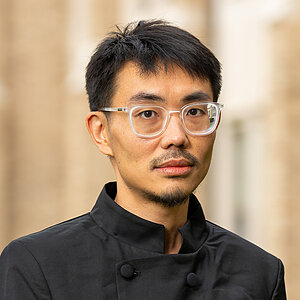
<figure class="image image-left image-circle"><img src="https://al.nd.edu/assets/669124/300x/yu_hao_chen_headshot.jpg" alt="A man with dark hair, a goatee, and clear glasses wears a black jacket." width="300" height="300"></figure>
<h2><strong>YuHao Chen — Music</strong></h2>
<p>YuHao Chen is a sound studies scholar whose research traces the interplay between sound-writing technology and embodiment in East Asia during the late 19th and early 20th centuries. He received his Ph.D. in music, with graduate certificates in Asian studies and cultural studies, from the University of Pittsburgh and, most recently, was a postdoctoral fellow in the Global Arts + Humanities Society of Fellows at The Ohio State University.</p>
<p>In the <a href="https://music.nd.edu/">Department of Music</a>, Chen plans to extend his doctoral research into various publications. His first book, tentatively titled “Phonographic Conversion,” aims to expand traditional views of sound recording by looking at phonetic reading systems as musical records in the context of early Chinese disability education. His second work, tentatively titled “Archives for the Unsound,” considers the role of silence in 19th-century Western perceptions of China.</p>
<p>“Taken together, my research addresses the overarching question of what it means to be human in the machine age during the late 19th and early 20th centuries,” he said.</p>
<p>A trained musician, Chen will work with mentor <a href="https://music.nd.edu/people/faculty/berthold-hoeckner/">Berthold Hoeckner</a>, the Keough-Hesburgh Professor of Music History, and he plans to engage with the <a href="https://strategicframework.nd.edu/initiatives/arts/">Arts</a> Initiative and the <a href="https://ftt.nd.edu/news-events/events/research-workshops/">Visual Cultures Workshop Series</a>.</p>
<p>“I am eager to initiate conversations around art-based methods for the humanities,” he said.</p>
<figure class="image image-left image-circle"><img src="https://al.nd.edu/assets/669125/300x/mattlyn_cordova_headshot.jpg" alt="Woman with dark hair smiles, wearing a navy blazer over a white patterned shirt." width="300" height="300"></figure>
<h2>
<strong>Mattlyn Cordova — </strong><strong>Institute for Latino Studies </strong>
</h2>
<p>Mattlyn Cordova is an American studies scholar with a focus on film and digital studies, Latinx visual culture, affect theory, and brownness. Her research examines the role of digital technology in society’s understanding of racial and ethnic formations in the United States.</p>
<p>A Harvard University graduate, Cordova plans to expand on her dissertation, “Brown Belongings: Intimacy and Community Making in Twenty-First Century Latinx Digital Media,” into her first book manuscript. The book will explore the relationship between the formation of Latinidad and digital spectatorship and consider how digital distribution has enabled new forms of viewing and new modes of spectatorship that facilitate the creation of communities among dispersed spectators.</p>
<p>“Drawing from Latinx performance studies scholarship, I argue that recent technological and media shifts invite new forms of intimacies and identities, ones that illuminate a vibrant understanding of Latinx spectatorship and community,” said Cordova, who will join the <a href="https://latinostudies.nd.edu/">Institute for Latino Studies (ILS)</a>. “This project will consider the use of virtual reality, specifically as a medium that asks viewers to become part of the image.”</p>
<p>Cordova will be mentored by ILS director <a href="https://latinostudies.nd.edu/people/personnel/jason-ruiz/">Jason Ruiz</a>, professor of American studies, and work closely with <a href="https://ftt.nd.edu/people/anne-garcia-romero/">Anne García-Romero</a>, professor of theatre and chair of the <a href="https://ftt.nd.edu/">Department of Film, Television, and Theatre</a>.</p>
<p>“This program appeals to me not only because of Notre Dame’s investment in the arts and humanities, as evidenced by the University-wide <a href="https://strategicframework.nd.edu/initiatives/arts/">Arts Initiative</a>,” Cordova said, “but also because of the vibrant community the Institute for Latino Studies offers.”</p>
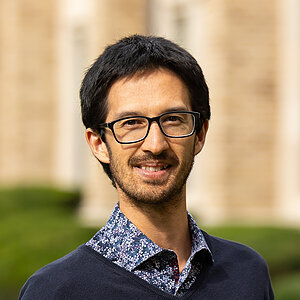
<figure class="image image-left image-circle"><img src="https://al.nd.edu/assets/669126/300x/stephen_mackereth_headshot.jpg" alt="Man wearing glasses and a dark sweater over a patterned shirt smiles in front of a tan building." width="300" height="300"></figure>
<h2><strong>Stephen Mackereth — Philosophy</strong></h2>
<p>Previously a member of the Dartmouth Society of Fellows, Stephen Mackereth studies logic, philosophy of mathematics, and the history of analytic philosophy. He specifically researches the epistemological and conceptual structure of mathematics using the methods of mathematical logic.</p>
<p>“What is particularly delightful about this approach to the philosophy of mathematics is that it becomes possible to prove mathematical theorems that have significance for our philosophical understanding of mathematics as a whole,” Mackereth said. “These theorems belong to the tradition of metamathematics, or mathematics reflecting upon itself.”</p>
<p>Mackereth’s research interests stem from an effort to understand the great foundational debate in 20th-century mathematics between logicists and constructivists, as well as the effects of this debate on the subsequent development of analytic philosophy. He enjoys thinking about logical and semantic paradoxes; about the concepts of proof, truth, computation, and definition; and about the nature and significance of foundations in mathematics.</p>
<p>In the <a href="https://philosophy.nd.edu/">Department of Philosophy</a>, Mackereth will be mentored by <a href="https://philosophy.nd.edu/people/faculty/joel-david-hamkins/">Joel David Hamkins</a>, the John Cardinal O'Hara Professor of Logic. He plans to expand on topics he has written about, such as neo-Fregean logicism and Kurt Gödel’s Dialectica translation.</p>
<figure class="image image-left image-circle"><img src="https://al.nd.edu/assets/677803/300x/oliver_silverman_headshot.jpg" alt="A person with short, dark hair, brown eyes, and a slight mustache smiles gently." width="300" height="300"></figure>
<h2><strong>Oliver Silverman — Political Science</strong></h2>
<p>Political theorist Oliver Silverman aims to illuminate how classical political ideas emerged in explicit opposition to insurgent social-struggle practices. Silverman’s current project, “Profane Heaven: Apocalypse from Below and the Invention of Utopia,” offers a novel theory of utopia as both a political concept and a genre.</p>
<p>While utopian literature is commonly associated with egalitarianism and the imagination of communitarian alternatives, Silverman argues that the first English utopian works — by Thomas More, Francis Bacon, and James Harrington — were elite reactions to popular rebellions. Silverman further argues that the idea of utopia appeared as a secular version of heaven, an always-elsewhere good place, that delegitimized struggles for real equality on Earth.</p>
<p>“Reading classic works of political theory in the context of the popular uprisings that unfolded as they were written, I demonstrate that one of the most classic ideas in the history of political thought, utopia, is a product of both philosophical and political repressions of revolutionary movements,” Silverman said.</p>
<p>Silverman completed a Ph.D. at The Graduate Center, City University of New York (CUNY) and has been published in journals such as <em>Political Theory</em>, <em>History of the Present</em>, <em>Utopian Studies</em>, and <em>Theory &amp; Event</em>. Silverman will work closely with mentor <a href="https://politicalscience.nd.edu/people/mary-keys/">Mary Keys</a>, professor in the <a href="https://politicalscience.nd.edu/">Department of Political Science.</a></p>
<p class="attribution">Originally published by <span class="rel-author">Mary Kinney</span> at <span class="rel-source"><a href="https://al.nd.edu/news/latest-news/five-early-career-scholars-form-second-arts-letters-cohort-of-prestigious-notre-dame-postdoctoral-fellowship-program/">al.nd.edu</a></span> on <span class="rel-pubdate">September 28, 2026</span>.</p>]]>
    </content>
    <link rel="enclosure" type="image/jpeg" href="https://graduateschool.nd.edu/assets/680222/20260922_jlh_provost_postdoctoral_fellows_091_1200x.jpg" title="Five people stand in front of a building, dressed in formal attire."/>
    <author>
      <name>Mary Kinney</name>
    </author>
  </entry>
  <entry>
    <id>tag:graduateschool.nd.edu,2005:News/185642</id>
    <published>2026-09-21T08:05:07-04:00</published>
    <updated>2026-09-21T08:05:07-04:00</updated>
    <link rel="alternate" type="text/html" href="https://graduateschool.nd.edu/news/notre-dame-phd-candidate-awarded-amelia-earhart-fellowship/"/>
    <title>Notre Dame PhD candidate awarded Amelia Earhart Fellowship</title>
    <summary type="text">
      <![CDATA[University of Notre Dame’s Lauren Henderson, a fifth-year doctoral student in the Department of Physics and Astronomy, has been awarded the prestigious Amelia Earhart Fellowship, presented by Zonta International.…]]>
    </summary>
    <content type="html">
      <![CDATA[<p>University of Notre Dame’s Lauren Henderson, a fifth-year doctoral student in the Department of Physics and Astronomy, has been awarded the prestigious <a href="https://www.zonta.org/Web/Web/Programs/Education/Amelia_Earhart_Fellowship.aspx">Amelia Earhart Fellowship</a>, presented by Zonta International.</p>
<p>Henderson has used the fellowship to support her research on ancient stars. Her doctoral work falls into the field of galactic archeology.</p>
<p>“It's like doing archeology in a way, where you dig up some ancient artifact and you piece together what an ancient civilization was doing,” she said. “Well, we're looking at these really ancient stars and piecing together how the Milky Way and its surrounding galaxies evolved over time.”</p>
<p>More specifically, Henderson works in the lab of Associate Professor of Physics and Astronomy <a href="https://physics.nd.edu/people/evan-kirby/">Evan Kirby</a>, and they study stars in dwarf spheroidal galaxies around the Milky Way. Dwarf spheroidal galaxies, as explained by Henderson, are “really small, unimpressive-looking galaxies” that are mostly clumps of stars and dark matter. She studies the stars inside of these galaxies because of their age, analyzing them through spectroscopy to understand how heavy elements were made inside of them.</p>
<p>“When I suggested this project to Lauren more than three years ago, I had a particular focus in mind: determine how long galaxies lived,” Kirby said. “Rather than fixating on the goal I had in mind, Lauren followed where the data took her. Instead of taking my word for what the data would say, she found a different conclusion on a related topic: the sources of the heaviest elements of the periodic table.”</p>
<p>The $10,000 Amelia Earhart Fellowship is awarded to up to 30 women pursuing doctoral degrees in aerospace engineering and space sciences, a place where they are historically underrepresented.</p>
<p>Henderson said she feels being awarded a fellowship focused on women in space science aligns closely with her core values.</p>
<p>“Growing up I knew I always wanted to be a scientist, and unfortunately, it's still the case that in media, you either see male scientists or a very specific way that female scientists are portrayed, and a lot of little girls can't see themselves being a scientist because of that,” Henderson said. “Increasing representation of women and other underrepresented minorities in physics and astronomy has always been really important to me because it's just so clearly a problem.”</p>
<p>The fellowship will allow Henderson to continue her research, travel to conferences and connect with other women in science.</p>
<p>As her doctoral program reaches its final stretch, she plans to continue her research in galactic archeology, hoping to apply to post doctorate positions in the fall of 2027 and graduate the following spring. Eventually, Henderson wants to move to a faculty position where she can teach and have her own research group.</p>
<p class="attribution">Originally published by <span class="rel-author">Ella Harner</span> at <span class="rel-source"><a href="https://science.nd.edu/news-and-media/news/notre-dame-phd-candidate-awarded-amelia-earhart-fellowship/">science.nd.edu</a></span> on <span class="rel-pubdate">September 16, 2026</span>.</p>]]>
    </content>
    <link rel="enclosure" type="image/jpeg" href="https://graduateschool.nd.edu/assets/679226/lauren_henderson.jpeg" title="Lauren Henderson"/>
    <author>
      <name>Ella Harner</name>
    </author>
  </entry>
  <entry>
    <id>tag:graduateschool.nd.edu,2005:News/185640</id>
    <published>2026-09-21T08:04:05-04:00</published>
    <updated>2026-09-21T08:04:05-04:00</updated>
    <link rel="alternate" type="text/html" href="https://graduateschool.nd.edu/news/phd-candidate-mayra-ortiz-ocana-selected-as-a-2026-emerging-scholar-by-the-harry-frank-guggenheim-foundation/"/>
    <title>Mayra Ortiz Ocana, selected as a 2026 Emerging Scholar by the Harry Frank Guggenheim Foundation</title>
    <summary type="text">
      <![CDATA[HFG Welcomes Its 2026 Emerging Scholars …]]>
    </summary>
    <content type="html">
      <![CDATA[<header class="entry-header">
<h3 class="entry-title">HFG Welcomes Its 2026 Emerging Scholars</h3>
<figure class="image image-right"><img src="https://politicalscience.nd.edu/assets/679033/mayra_ortiz_ocan_a_headshot_1_.jpg" alt="Woman in plaid blazer smiles, standing in front of a colorful stained-glass mosaic." width="300" height="375">
<figcaption>Mayra Ortiz Ocana</figcaption>
</figure>
</header>
<p>September 16, 2026</p>
<div class="at-above-post addthis_tool" data-url="https://www.hfg.org/hfg-welcomes-its-2026-emerging-scholars/"> </div>
<p>(NEW YORK) — Today, The Harry Frank Guggenheim Foundation announced the selection of its 2026 <a href="https://www.hfg.org/emerging-scholars/">HFG Emerging Scholars</a>. The nine doctoral candidates—selected through a rigorous evaluation process—are conducting research that increases understanding of problems of violence around the world.</p>
<p>The scholars are completing dissertations on a range of important topics, including school shooting incidents in the United States, anti-minority vigilante violence in India, and the governance of displaced populations and refugees in Lebanon and Turkey.</p>
<p>“Does cattle insurance reduce or increase violence between herders? What differentiates a school shooting that occurs from one that was prevented? What is it about psychopathic personality traits that elevates the risk of committing aggression and violence? How do prisons promote conflict between racial and ethnic groups? Each of our 2026 Emerging Scholars—all exceptional doctoral candidates—is asking a question whose answer will, we hope, help to reduce the misery caused by violence, as Harry Guggenheim intended in creating this foundation,” said HFG Director of Research Joel Wallman.</p>
<p>The awards are given to promising researchers in their final year of writing a doctoral dissertation that examines a salient aspect of violence. In selecting the awardees, HFG prioritizes research that addresses urgent, contemporary problems.</p>
<figure class="image image-default"><img src="https://politicalscience.nd.edu/assets/679032/emerging_scholars_es_2026_red_group_09012026_1536x865.webp" alt="Portraits of ten individuals, including the Harry Frank Guggenheim Foundation Emerging Scholars 2026 logo." width="600" height="338">
<figcaption>FIRST ROW: KARTHIKA BABY SUJATHA, JUDITH HOPPERMANN, LINDSAY J. LERNER, NAOMI NERO, ENRIQUE OLIVARES-PELAYO; SECOND ROW: <a href="https://politicalscience.nd.edu/people/graduate-students/mayra-ortiz-ocana/">MAYRA ORTIZ OCANA</a>, EMMA RIKKEN, AARUSHI SHAH, YASH SHARMA</figcaption>
</figure>
<hr class="wp-block-separator has-alpha-channel-opacity">
<p><strong>2026 Scholars and Research Topics</strong></p>
<p><strong>Karthika Baby Sujatha </strong>(United Nations University – Maastricht Economic and Social Research Institute on Innovation and Technology &amp; Maastricht University)<strong> </strong><em>Understanding and Altering Men’s Attitudes, Tolerance, and Behaviors Towards Intimate Partner Violence: A Field Experiment in Kerala, India</em></p>
<p><strong>Judith Hoppermann </strong>(SOAS, University of London)<strong> </strong><em>Governing Displacement, Contesting the State: Armed Transnational Movements, Refugees and Political Reordering in the Syrian Borderlands</em></p>
<p><strong>Lindsay J. Lerner </strong>(John Jay College of Criminal Justice &amp; The CUNY Graduate Center) <em>Advancing School Safety: Comparing Completed &amp; Averted School Shootings</em></p>
<p><strong>Naomi Nero </strong>(Georgetown University)<strong> </strong><em>Valuing and Devaluing Others: Identifying Mechanisms Relevant to Predicting and Preventing Interpersonal Violence in Psychopathy</em></p>
<p><strong>Enrique Olivares-Pelayo </strong>(University of Arizona)<strong> </strong><em>Running Raza: An Ethnography from Inside Arizona’s Prisons</em><br><br><a href="https://politicalscience.nd.edu/people/graduate-students/mayra-ortiz-ocana/"><strong>Mayra Ortiz Ocana </strong></a>(University of Notre Dame) <em>Gatekeeping Justice: Criminal Epistemologies in Prosecuting Organized Crime Violence</em></p>
<p><strong>Emma Rikken </strong>(Wageningen University &amp; Research) <em>Drought, Rain, and Raiders: Testing Insurance and Edutainment Against Conflict in Africa</em></p>
<p><strong>Aarushi Shah</strong> (Columbia University)<strong> </strong><em>Crime and Replenishment? An Ethnographic Study of the Remedial Work of a Domestic Violence Court in New York</em></p>
<p><strong>Yash Sharma </strong>(University of Cincinnati)<strong> </strong><em>Majoritarianism and its Discontents: Violence, Mobilization and Resistance in Contemporary India</em></p>
<hr>
<p><em>The Harry Frank Guggenheim Foundation is a leader in creating and disseminating knowledge on the nature, consequences, and reduction of violence in its many forms, including war, crime, and human aggression.</em></p>
<p><em>For more information contact:</em></p>
<p><em>Halima Gikandi, Senior Communications Manager</em></p>
<p><em>info@hfg.org | 646.428.097</em>3</p>
<p><em>Originally published at <a href="https://www.hfg.org/hfg-welcomes-its-2026-emerging-scholars/">HFG.org</a> on September 16, 2026.</em></p>
<p class="attribution">Originally published by <span class="rel-author">Halima Gikandi, Senior Communications Manager (info@hfg.org)</span> at <span class="rel-source"><a href="https://politicalscience.nd.edu/news-and-events/news/phd-candidate-mayra-ortiz-ocana-selected-as-a-2026-emerging-scholar-by-the-harry-frank-guggenheim-foundation/">politicalscience.nd.edu</a></span> on <span class="rel-pubdate">September 17, 2026</span>.</p>]]>
    </content>
    <link rel="enclosure" type="image/jpeg" href="https://graduateschool.nd.edu/assets/679224/moo_picture_mayra_ortiz_oca_a_1_.jpg" title="Image of Mayra Ortiz Ocana"/>
    <author>
      <name>Halima Gikandi, Senior Communications Manager (info@hfg.org)</name>
    </author>
  </entry>
  <entry>
    <id>tag:graduateschool.nd.edu,2005:News/184634</id>
    <published>2026-08-10T09:46:00-04:00</published>
    <updated>2026-08-10T09:46:34-04:00</updated>
    <link rel="alternate" type="text/html" href="https://graduateschool.nd.edu/news/should-i-teach-at-a-liberal-arts-college-or-research-university/"/>
    <title>Should I Teach at a Liberal Arts College or Research University?</title>
    <summary type="text">
      <![CDATA[Noting the fierce competition to secure tenure-track faculty positions at highly ranked research universities, Kyler Schubkegel, a graduate associate in Notre Dame Learning’s Kaneb Center for Teaching Excellence, writes that it’s worthwhile to consider another route to such a job: the liberal arts college.]]>
    </summary>
    <content type="html">
      <![CDATA[<p>Shrinking departments and hordes of qualified candidates have transformed many academic job searches into a numbers game. The game is particularly unforgiving at highly ranked research universities, so for many of us, it’s worthwhile to consider another route to a tenure-track faculty job: the liberal arts college.</p>
<h2>What Do These Terms Even Mean?</h2>
<p>The difference between a “research university” and a “liberal arts college” is largely an American phenomenon, but it’s not always clear even for folks like myself who have spent their entire lives in the United States.</p>
<p>The <em>structural </em>distinction is whether an institution offers any (or very many) graduate programs. Because the purpose of grad school is usually to learn how to conduct research in a given field, research universities have a particular institutional commitment to supporting graduate education.</p>
<p>There are also, however, many differences in <em>attitude</em> or emphasis. The research university model is the default in academic circles, and liberal arts colleges often position their curricula or educational philosophies in contrast to this default. They might highlight <a href="https://www.grinnell.edu/admission/apply/tips/liberal-arts">excellence in undergraduate education, curricular flexibility</a>, or unique aspects of their mission or values.</p>
<p>It is a misconception, though, that faculty at undergraduate-focused colleges do not or cannot carry out research agendas. Research still matters, especially at <a href="https://www.insidehighered.com/advice/2015/10/23/advice-getting-job-selective-liberal-arts-college-essay">more selective colleges</a>, and this is true across disciplines. The term “liberal arts” is not exclusive: many professors in STEM have <a href="http://www.pl-enthusiast.net/2015/03/16/teaching-and-researching-pl-at-a-liberal-arts-college/">fulfilling research and teaching careers</a> at smaller colleges.</p>
<h2>Pros and Cons of Teaching at a Liberal Arts College</h2>
<p>Specific liberal arts colleges vary widely, of course, so make sure to research any institution where you are interested in applying. But most have several elements that make the teaching experience distinct from that of a research university appointment. Prospective faculty at liberal arts colleges might expect:</p>
<ul>
<li>
<strong>More hours devoted to teaching, mentorship, course development, and pedagogical growth.</strong> The overall balance of responsibilities is <a href="https://www.chronicle.com/article/what-to-expect-in-your-first-year-of-work-at-a-small-college?bc_nonce=cyu5qypetij0zxzgm3zb8&amp;cid=reg_wall_signup">weighted more toward teaching activity</a>, with most faculty teaching four to six courses per academic year.</li>
<li>
<strong>A variety of teaching experiences. </strong>Because departments tend to be smaller, faculty at liberal arts colleges often teach a much wider range of courses. They also <a href="https://www.higheredjobs.com/articles/articleDisplay.cfm?ID=4151">more frequently team-teach or design experiential learning programs</a> outside their field or even beyond their department.</li>
<li>
<strong>Less complex research infrastructure. </strong>There is much less pressure for faculty to secure large external grants, but this often corresponds to <a href="https://www.duckofminerva.com/2013/01/so-you-want-to-be-a-liberal-arts-college-professor.html">less institutional support for research</a> overall. Not having graduate students to assist with projects often means a slower pace, and faculty who are not teaching graduate seminars may need to pursue other avenues to stay current in the field. Current faculty assure us, though, that <a href="https://www.duckofminerva.com/2016/04/so-you-want-to-be-a-liberal-arts-college-professor-life-in-the-liberal-arts-edition-part-i.html">it is possible to do so</a>.</li>
<li>
<strong>A broader definition of research. </strong>Tenure committees typically require fewer major publications, while also <a href="https://www.higheredjobs.com/articles/articleDisplay.cfm?ID=4157">valuing public writing</a>, scholarship in the field of education and pedagogy, and other forms of output that may carry less weight in the research university setting.</li>
<li>
<strong>Slightly lower pay.</strong> Unfortunately, equivalent positions at liberal arts colleges usually offer smaller salaries than at large research universities. Geographical cost-of-living factors are still relevant, however.</li>
<li>
<strong>Faculty governance. </strong>Professors at liberal arts colleges play especially active roles in institutional decision-making, with many opportunities (and responsibilities) to develop curricula, join task forces, and shape their work environment.</li>
</ul>
<h2>Action Steps</h2>
<p>If you are interested in working at a liberal arts college, here are some steps you might take during graduate school to be competitive:</p>
<ul>
<li>
<strong>Take any available opportunity to teach, and <em>keep all your materials</em>. </strong>As you move through your coursework and dissertation research, collect ideas for classes you might want to teach in the future, as many job searches will require multiple sample syllabi.</li>
<li>
<strong>Get involved with the center for teaching and learning on your campus.</strong> Here at Notre Dame, attend <a href="https://learning.nd.edu/workshops-and-events/">Kaneb Center workshops</a>, request a <a href="https://learning.nd.edu/consultations-and-programs/grad-students-and-postdocs/teaching-development-opportunities/#peer-observation">peer observation</a>, or even inquire about avenues to contribute to scholarship on pedagogy and teaching practices.</li>
<li>
<strong>Develop administrative skills to prepare for faculty governance. </strong>For example, you might consider running for student government in your department or graduate school. You will also stand out if you work to demonstrate a human-centered understanding of issues that are transforming the landscape of higher education, like generative AI or intellectual freedom. Competence and vision for the future in these areas will make you a valuable colleague indeed. </li>
</ul>
<p><em>Kyler Schubkegel is a graduate associate at Notre Dame Learning’s Kaneb Center for Teaching Excellence and is pursuing a Ph.D. in English at the University.</em></p>
<p class="attribution">Originally published by <span class="rel-author">Kyler Schubkegel</span> at <span class="rel-source"><a href="https://learning.nd.edu/news/should-i-teach-at-a-liberal-arts-college-or-research-university/">learning.nd.edu</a></span> on <span class="rel-pubdate">August 06, 2026</span>.</p>]]>
    </content>
    <link rel="enclosure" type="image/jpeg" href="https://graduateschool.nd.edu/assets/672267/mc_11419_fall_scenicjpg.jpg" title="Students walk along a sunlit sidewalk framed by vibrant yellow trees and brilliant red bushes on a college campus during autumn."/>
    <author>
      <name>Kyler Schubkegel</name>
    </author>
  </entry>
  <entry>
    <id>tag:graduateschool.nd.edu,2005:News/183395</id>
    <published>2026-07-29T14:11:00-04:00</published>
    <updated>2026-07-29T14:22:38-04:00</updated>
    <link rel="alternate" type="text/html" href="https://graduateschool.nd.edu/news/srop-experience-helps-devin-ugbaja-envision-a-future-in-research/"/>
    <title>SROP experience helps Devin Ugbaja envision a future in research </title>
    <summary type="text">
      <![CDATA[Devin Ugbaja, a junior sociology student at Henderson State University, crossed the room at the McNair Scholars conference in Florida, hoping to pick up a pen, or perhaps a T-shirt for his father. A devoted Fighting Irish football fan, his father had made sure Ugbaja grew up watching Rudy. Instead, Ugbaja walked away from the University of Notre Dame recruiting table with an opportunity that would eventually bring him to campus as a researcher.]]>
    </summary>
    <content type="html">
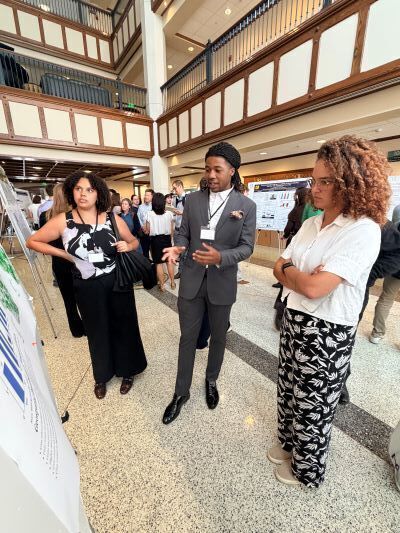
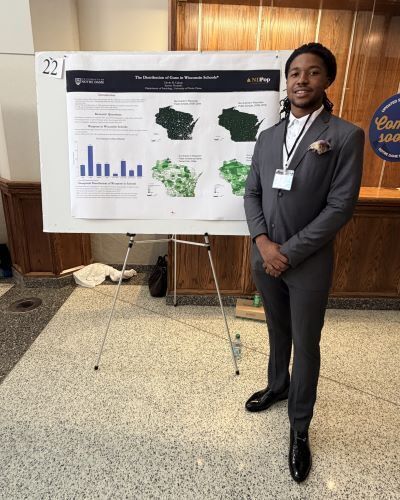
      <![CDATA[<figure class="image image-right" style="width: 350px;"><img src="https://graduateschool.nd.edu/assets/668149/devin_poster_board_presentation.jpg" alt="A young man braided hair wearing a gray suit gestures toward a research poster as he speaks with two women at a university poster session. They stand near display boards." width="350">
<figcaption>Devin Ugbaja, a member of the 2026 SROP cohort, explains his project to attendees at the poster session celebrating the participants and their research.</figcaption>
</figure>
<p>Devin Ugbaja, a junior sociology student at Henderson State University, crossed the room at the McNair Scholars conference in Florida, hoping to pick up a pen, or perhaps a T-shirt for his father. A devoted Fighting Irish football fan, his father had made sure Ugbaja grew up watching Rudy. Instead, Ugbaja walked away from the University of Notre Dame recruiting table with an opportunity that would eventually bring him to campus as a researcher.</p>
<p>Coming from a small university in Arkansas, Ugbaja had always assumed Notre Dame was out of his league. But when Notre Dame recruiter Jenipher Akuku Huisman encouraged him to apply for the <a href="https://graduateschool.nd.edu/admissions/summer-research-opportunities/">Summer Research Opportunities Program</a> (SROP)—a 10-week program that gives undergraduate students hands-on research experience and preparation for graduate study—there was something about the conviction in her voice that stayed with him. “It was how serious she was,” Ugbaja recalled. “She was looking me in the eye, telling me, ‘This would be a great fit for you!’”</p>
<p>Akuku Huisman knows that, for students weighing opportunities at highly competitive institutions, a few words of encouragement can make all the difference. “Sometimes students simply need someone to remind them that they belong,” she said. “That their research goals are possible and that they can knock on closed doors.”</p>
<p>Ugbaja began the application process and later reconnected with Akuku Huisman at a conference in Maryland, where the two worked on it together. Months later, he arrived beneath the Golden Dome as a member of Notre Dame’s 2026 SROP cohort. At the center of the experience that would transform how he viewed his future—and himself—was Steven Alvarado, associate professor of sociology at Notre Dame and Ugbaja’s faculty mentor.</p>
<p>For Alvarado, the opportunity to give back was special. A first-generation Latino college student whose parents immigrated from El Salvador without legal status, he had participated in SROP at the University of Chicago early in his own academic journey. The experience changed the course of his life. Years later, he recognized that those experiences could shape the kind of mentor he became. “I recognize what I can contribute as a mentor and faculty member from an under-resourced background,” Alvarado said.</p>
<p>From their earliest conversations, Alvarado recognized Ugbaja’s research curiosity. “He arrived with the raw material of intellectual curiosity, and I wanted to give him the tools to apply that curiosity to research ,” Alvarado said. Alvarado brought Ugbaja into his research team, where they began analyzing 1.9 million student administrative records from the Wisconsin Department of Public Instruction to identify patterns of student exposure to firearms on school grounds.</p>
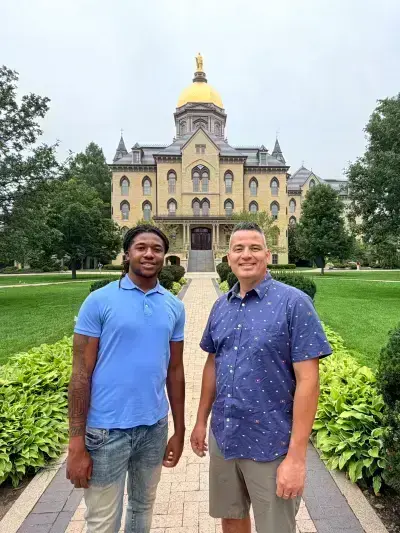
<figure class="image image-left" style="width: 350px;"><img src="https://graduateschool.nd.edu/assets/668176/final_photo_with_auto_adjust.webp" alt="Two men smile on a brick path, the Main Building and Golden Dome of Notre Dame behind them. One wears a blue polo, the other a patterned shirt." width="350">
<figcaption>Devin Ugbaja stands alongside his faculty mentor and associate professor of sociology at Notre Dame, Steven Alvarado.</figcaption>
</figure>
<p>But the mentorship was about more than completing a research assignment. Alvarado treated Ugbaja not simply as an undergraduate, but as a developing colleague. “You are shifting your role from simply being a student to being a colleague in training,” Alvarado said. “That’s something I think is really important to impart to students once they’re making this transition and thinking seriously about graduate school.”</p>
<p>For Ugbaja, that meant being invited into meetings, included in conversations he might not understand, and given the time to learn unfamiliar terminology and research methods. “It was so cool to see how selfless he was and how much he cared about me as just an undergrad,” Ugbaja said. “He took his time explaining things to me. He never made me feel like I was a burden.” That patience mattered during Ugbaja’s first days at Notre Dame, when he was wrestling with imposter syndrome and still trying to imagine himself as a researcher.</p>
<p>“Research wasn’t something I ever thought about doing,” he said. “I came to college as a student-athlete, and all I thought about was playing football. Once I gave it up, I started taking school more seriously.” At Notre Dame, Alvarado helped him understand that he had earned his place. “He made me realize that I belong here,” Ugbaja said. “I have a brilliant mind, and I shouldn’t feel out of place. I’m here because I belong.”</p>
<p>Over the 10-week program, Alvarado watched Ugbaja begin to talk, work, and think like a researcher. The shift became especially clear after Ugbaja mastered a complex set of research skills in a matter of weeks. “There was a period during the summer when he had been working with one of my graduate students and showed up able to navigate a federal education statistics database, download the data, identify the variables, and use specialized software to create these incredible spatial maps,” Alvarado said.</p>
<p>As his skills and confidence grew, so did Ugbaja’s vision for the future. Before coming to Notre Dame, he planned to earn a master’s degree in social work and to pursue his professional license. His mentor challenged him to consider a path he had never seriously envisioned. “He challenged me to think about the possibilities if I were to pursue a Ph.D.,” Ugbaja said. “He challenged me to think outside the box and get the most out of this opportunity because he realized how much an experience like this had done for him.”</p>
<figure class="image image-right" style="width: 350px;"><img src="https://graduateschool.nd.edu/assets/668178/final_devin_crop.jpg" alt="Smiling young Black man in a grey suit stands by his research poster on gun distribution in Wisconsin." width="350">
<figcaption>Ugbaja presented research on gun distribution in Wisconsin at the 2026 poster session.</figcaption>
</figure>
<p>By the end of SROP, Ugbaja had conducted research, presented his work, prepared for the GRE, explored graduate programs, and worked on his application materials. He left Notre Dame with a list of more than 15 schools to consider and a new vision of himself earning a doctorate and someday mentoring another student the way Alvarado had mentored him. “Now I see myself going into academia for another four or five years, getting my Ph.D. and maybe instructing another student like me through SROP, whether at this institution or somewhere else,” he said. “I see myself with ‘Dr.’ in front of my name.”</p>
<p>As Ugbaja heads back to Henderson State in the fall, he has been invited to continue working remotely with the research team as the project moves forward. “I appreciate him so much,” Ugbaja said. “I made sure he knew every week how thankful I was for him and how much he was doing for me.”</p>
<p>For Alvarado, that connection offered something difficult to find in academic research—an immediate, deeply personal sense of impact. “It enriches my life because it allows me to give back,” he said. “In my field, we can wait years to publish a piece. This is the kind of experience where, after one conversation, you can change a person’s life. It is validation that what I’m doing is actually important.” He hopes Ugbaja leaves Notre Dame understanding that academia is a place where he belongs and that his intellectual curiosity can carry him far. “I see him at the launch pad, ready to go,” Alvarado said. “He’s going to be a star. He’s going to succeed. I’m just trying to give him a little more fuel.”</p>
<p>Alvarado also sees SROP as an important way for Notre Dame to attract promising scholars who might not otherwise envision themselves at the University. “SROP is a tool to attract top students who might not otherwise give Notre Dame a chance,” Alvarado said. “It is an important program for the University as it continues its journey toward becoming one of the world’s premier research institutions.”</p>
<p>By summer’s end, Ugbaja's own words suggested that the experience had changed how he saw himself. The program’s most important lesson was deeply personal. “To not underestimate myself or sell myself short,” he said. “Whatever the highest accolade is, I’m capable of achieving it.”</p>
<p>He came to a Notre Dame recruiting table hoping to find something for his father. He left the program carrying something far more consequential: a new vision of himself, a continuing place on a research team, and the belief that “Dr. Devin Ugbaja” is within reach.</p>]]>
    </content>
    <link rel="enclosure" type="image/jpeg" href="https://graduateschool.nd.edu/assets/668143/devin_and_steven_pic_1.jpg" title="Two smiling men in blue shirts stand on a path before Notre Dame's Main Building with the Golden Dome."/>
    <author>
      <name>Traci DuVal</name>
    </author>
  </entry>
  <entry>
    <id>tag:graduateschool.nd.edu,2005:News/183066</id>
    <published>2026-07-14T11:57:00-04:00</published>
    <updated>2026-07-14T11:57:47-04:00</updated>
    <link rel="alternate" type="text/html" href="https://graduateschool.nd.edu/news/researchers-show-how-early-rna-based-life-may-have-repaired-its-genome-providing-insight-into-the-origins-of-life/"/>
    <title>Researchers show how early RNA-based life may have repaired its genome, providing insight into the origins of life</title>
    <summary type="text">
      <![CDATA[Notre Dame postdoctoral researcher Annyesha Biswas is the first author of a new study revealing how RNA may have repaired itself billions of years ago—offering new insight into the origins of life and a potential tool for detecting disease-related RNA damage today.  ]]>
    </summary>
    <content type="html">
      <![CDATA[<p>In most modern cells, DNA stores the genetic blueprint, and relies on proteins to replicate, repair and build from those blueprints. At the same time, proteins require instructions from DNA to be made in the first place.</p>
<p>So which one came first? Neither, hypothesize researchers like <a href="https://chemistry.nd.edu/people/saurja-dasgupta/">Saurja DasGupta</a>, a biochemist at the University of Notre Dame.</p>
<p>DasGupta seeks to better understand the chemical origins of life by studying the structure, function and evolution of RNA, an intermediary molecule that can both store genetic information and catalyze biochemical reactions. In a study out today in <a href="https://www.nature.com/articles/s41467-026-74622-8">Nature Communications</a>, DasGupta and colleagues present a key mechanism for sustaining RNA-based life: an engineered enzyme that selectively recognizes and repairs broken RNA.</p>
<p>“Our results suggest that the molecular tools needed to preserve the RNA-based genetic code and pass it on to future generations could have been furnished by RNA alone — no proteins required,” said DasGupta, who is an assistant professor in the <a href="https://chemistry.nd.edu/">Department of Chemistry and Biochemistry</a> with a concurrent appointment in the <a href="https://biology.nd.edu/">Department of Biological Sciences</a>.</p>
<p>The RNA-based enzyme, or “ribozyme,” engineered by the researchers pastes together pieces of RNA and targets a distinguishing feature of broken RNA: a phosphate group — one phosphorous atom bonded to four oxygen atoms — at the end of the broken RNA chain. Intact strands of RNA, in contrast, terminate in a hydroxyl group — one oxygen atom and one hydrogen atom.</p>
<p>“The fact that this enzyme seeks out terminal phosphate groups in RNA — and, therefore, broken RNAs — while ignoring strands that end with standard hydroxyl groups suggests that it could have been important for primordial RNA repair,” said DasGupta, who collaborated with Jack W. Szostak of the University of Chicago on the study.</p>
<p>The dual storage and catalysis capabilities of RNA are the basis of the RNA World hypothesis, which posits that the earliest forms of life on Earth that lived almost four billion years ago were powered exclusively by RNA. The hypothesis suggests that RNA molecules preceded DNA and proteins for encoding genes and facilitating cellular processes, respectively.</p>
<p>“Modern organisms have repair mechanisms to mend broken DNAs; if early life forms carried their genes in RNA, then a similar repair process must have existed,” DasGupta said. “Otherwise, when heat, high pH or other stressors inevitably damaged the RNA genome, the genetic information would have been permanently lost, effectively stopping life in its tracks.”</p>
<p>A major hurdle to the study of primordial RNA systems is that they do not exist anymore. In order to show that these RNA-based organisms and their components could have sustained life, researchers need to first engineer new ribozymes through a process called in vitro evolution. The process entails selecting RNA catalysts with particular properties from trillions of RNA molecules inside test tubes. Researchers impose certain conditions on these artificial evolution experiments in hopes of engineering ribozymes with specific functions, but often encounter surprises along the way.</p>
<p>“The general consensus is that artificial evolution comes down to quite a bit of luck,” DasGupta said. “Sometimes you get what you’re aiming for, sometimes you don’t. And when you don’t, you start over and do it again.”</p>
<p>Initially, DasGupta’s research group set out to tweak the biochemistry of an existing class of ribozymes using the method. But when they saw unexpected results, the researchers followed those up instead of discarding them — and uncovered something brand new.</p>
<p>“The existence of this ribozyme has interesting implications for our understanding of the origins of life, and we came across it while looking for something else,” DasGupta said. “What I’m most surprised about, actually, is that it wasn’t found sooner.”</p>
<p>Beyond primordial biology, the significance of the newly-engineered ribozyme extends into the realm of biotechnology.</p>
<p>Broken RNA is common in viral infections and is a sign of abnormal cell function in certain cancers. The standard RNA sequencing techniques used to analyze the genetic markers of these diseases, however, misses out on broken RNA, since the chemical tags that mark RNA strands for analysis are not designed to attach to broken ends.</p>
<p>“Broken RNAs are essentially invisible in standard sequencing protocols, which is a barrier to understanding the relationship between RNA cleavage and disease,” said DasGupta, who is a faculty affiliate of the <a href="https://precisionhealth.nd.edu/">Berthiaume Institute for Precision Health</a> and the <a href="https://drugdiscovery.nd.edu/">Warren Center for Drug Discovery</a>.</p>
<p>Since the RNA-repair ribozyme is selective for broken RNA, it could be used to render cleaved strands “visible” by isolating them for special preparation prior to RNA sequencing. As a first step, DasGupta’s research group is in the process of optimizing the ribozyme’s reaction efficiency while broadening the range of potential molecular targets.</p>
<p>“What began as a quest for insight into the origins of RNA-based life and ended in an unanticipated finding has also provided a potential solution to a major challenge in biotechnology,” DasGupta said. “We’re excited to continue pursuing these new frontiers in ancient RNA biology and modern diagnostics.”</p>
<p>Study collaborators included first author Annyesha Biswas, a postdoctoral researcher in the Department of Chemistry and Biochemistry who was supported by the University’s <a href="https://strategicframework.nd.edu/initiatives/health-and-well-being/bioengineering-and-life-sciences-bels/">Bioengineering and Life Sciences initiative</a>, and Zoe Weiss, an M.D.-Ph.D. student at the Massachusetts Institute of Technology and Harvard University.</p>
<p><em><strong>Contact:</strong> Brandi Wampler, associate director of media relations, 574-631-2632, <a href="mailto:In%20most%20modern%20cells,%20DNA%20stores%20the%20genetic%20blueprint,%20and%20relies%20on%20proteins%20to%20replicate,%20repair%20and%20build%20from%20those%20blueprints.%20At%20the%20same%20time,%20proteins%20require%20instructions%20from%20DNA%20to%20be%20made%20in%20the%20first%20place.%20%20So%20which%20one%20came%20first?%20Neither,%20hypothesize%20researchers%20like%20Saurja%20DasGupta,%20a%20biochemist%20at%20the%20University%20of%20Notre%20Dame.%20%20DasGupta%20seeks%20to%20better%20understand%20the%20chemical%20origins%20of%20life%20by%20studying%20the%20structure,%20function%20and%20evolution%20of%20RNA,%20an%20intermediary%20molecule%20that%20can%20both%20store%20genetic%20information%20and%20catalyze%20biochemical%20reactions.%20In%20a%20study%20out%20today%20in%20Nature%20Communications,%20DasGupta%20and%20colleagues%20present%20a%20key%20mechanism%20for%20sustaining%20RNA-based%20life:%20an%20engineered%20enzyme%20that%20selectively%20recognizes%20and%20repairs%20broken%20RNA.%20%E2%80%9COur%20results%20suggest%20that%20the%20molecular%20tools%20needed%20to%20preserve%20the%20RNA-based%20genetic%20code%20and%20pass%20it%20on%20to%20future%20generations%20could%20have%20been%20furnished%20by%20RNA%20alone%20%E2%80%94%20no%20proteins%20required,%E2%80%9D%20said%20DasGupta,%20who%20is%20an%20assistant%20professor%20in%20the%20Department%20of%20Chemistry%20and%20Biochemistry%20with%20a%20concurrent%20appointment%20in%20the%20Department%20of%20Biological%20Sciences.%20The%20RNA-based%20enzyme,%20or%20%E2%80%9Cribozyme,%E2%80%9D%20engineered%20by%20the%20researchers%20pastes%20together%20pieces%20of%20RNA%20and%20targets%20a%20distinguishing%20feature%20of%20broken%20RNA:%20a%20phosphate%20group%20%E2%80%94%20one%20phosphorous%20atom%20bonded%20to%20four%20oxygen%20atoms%20%E2%80%94%20at%20the%20end%20of%20the%20broken%20RNA%20chain.%20Intact%20strands%20of%20RNA,%20in%20contrast,%20terminate%20in%20a%20hydroxyl%20group%20%E2%80%94%20one%20oxygen%20atom%20and%20one%20hydrogen%20atom.%20%20%E2%80%9CThe%20fact%20that%20this%20enzyme%20seeks%20out%20terminal%20phosphate%20groups%20in%20RNA%20%E2%80%94%20and,%20therefore,%20broken%20RNAs%20%E2%80%94%20while%20ignoring%20strands%20that%20end%20with%20standard%20hydroxyl%20groups%20suggests%20that%20it%20could%20have%20been%20important%20for%20primordial%20RNA%20repair,%E2%80%9D%20said%20DasGupta,%20who%20collaborated%20with%20Jack%20W.%20Szostak%20of%20the%20University%20of%20Chicago%20on%20the%20study.%20The%20dual%20storage%20and%20catalysis%20capabilities%20of%20RNA%20are%20the%20basis%20of%20the%20RNA%20World%20hypothesis,%20which%20posits%20that%20the%20earliest%20forms%20of%20life%20on%20Earth%20that%20lived%20almost%20four%20billion%20years%20ago%20were%20powered%20exclusively%20by%20RNA.%20The%20hypothesis%20suggests%20that%20RNA%20molecules%20preceded%20DNA%20and%20proteins%20for%20encoding%20genes%20and%20facilitating%20cellular%20processes,%20respectively.%20%E2%80%9CModern%20organisms%20have%20repair%20mechanisms%20to%20mend%20broken%20DNAs;%20if%20early%20life%20forms%20carried%20their%20genes%20in%20RNA,%20then%20a%20similar%20repair%20process%20must%20have%20existed,%E2%80%9D%20DasGupta%20said.%20%E2%80%9COtherwise,%20when%20heat,%20high%20pH%20or%20other%20stressors%20inevitably%20damaged%20the%20RNA%20genome,%20the%20genetic%20information%20would%20have%20been%20permanently%20lost,%20effectively%20stopping%20life%20in%20its%20tracks.%E2%80%9D%20A%20major%20hurdle%20to%20the%20study%20of%20primordial%20RNA%20systems%20is%20that%20they%20do%20not%20exist%20anymore.%20In%20order%20to%20show%20that%20these%20RNA-based%20organisms%20and%20their%20components%20could%20have%20sustained%20life,%20researchers%20need%20to%20first%20engineer%20new%20ribozymes%20through%20a%20process%20called%20in%20vitro%20evolution.%20The%20process%20entails%20selecting%20RNA%20catalysts%20with%20particular%20properties%20from%20trillions%20of%20RNA%20molecules%20inside%20test%20tubes.%20Researchers%20impose%20certain%20conditions%20on%20these%20artificial%20evolution%20experiments%20in%20hopes%20of%20engineering%20ribozymes%20with%20specific%20functions,%20but%20often%20encounter%20surprises%20along%20the%20way.%20%E2%80%9CThe%20general%20consensus%20is%20that%20artificial%20evolution%20comes%20down%20to%20quite%20a%20bit%20of%20luck,%E2%80%9D%20DasGupta%20said.%20%E2%80%9CSometimes%20you%20get%20what%20you%E2%80%99re%20aiming%20for,%20sometimes%20you%20don%E2%80%99t.%20And%20when%20you%20don%E2%80%99t,%20you%20start%20over%20and%20do%20it%20again.%E2%80%9D%20Initially,%20DasGupta%E2%80%99s%20research%20group%20set%20out%20to%20tweak%20the%20biochemistry%20of%20an%20existing%20class%20of%20ribozymes%20using%20the%20method.%20But%20when%20they%20saw%20unexpected%20results,%20the%20researchers%20followed%20those%20up%20instead%20of%20discarding%20them%20%E2%80%94%20and%20uncovered%20something%20brand%20new.%20%E2%80%9CThe%20existence%20of%20this%20ribozyme%20has%20interesting%20implications%20for%20our%20understanding%20of%20the%20origins%20of%20life,%20and%20we%20came%20across%20it%20while%20looking%20for%20something%20else,%E2%80%9D%20DasGupta%20said.%20%E2%80%9CWhat%20I%E2%80%99m%20most%20surprised%20about,%20actually,%20is%20that%20it%20wasn%E2%80%99t%20found%20sooner.%E2%80%9D%20Beyond%20primordial%20biology,%20the%20significance%20of%20the%20newly-engineered%20ribozyme%20extends%20into%20the%20realm%20of%20biotechnology.%20%20Broken%20RNA%20is%20common%20in%20viral%20infections%20and%20is%20a%20sign%20of%20abnormal%20cell%20function%20in%20certain%20cancers.%20The%20standard%20RNA%20sequencing%20techniques%20used%20to%20analyze%20the%20genetic%20markers%20of%20these%20diseases,%20however,%20misses%20out%20on%20broken%20RNA,%20since%20the%20chemical%20tags%20that%20mark%20RNA%20strands%20for%20analysis%20are%20not%20designed%20to%20attach%20to%20broken%20ends.%20%20%20%E2%80%9CBroken%20RNAs%20are%20essentially%20invisible%20in%20standard%20sequencing%20protocols,%20which%20is%20a%20barrier%20to%20understanding%20the%20relationship%20between%20RNA%20cleavage%20and%20disease,%E2%80%9D%20said%20DasGupta,%20who%20is%20a%20faculty%20affiliate%20of%20the%20Berthiaume%20Institute%20for%20Precision%20Health%20and%20the%20Warren%20Center%20for%20Drug%20Discovery.%20%20Since%20the%20RNA-repair%20ribozyme%20is%20selective%20for%20broken%20RNA,%20it%20could%20be%20used%20to%20render%20cleaved%20strands%20%E2%80%9Cvisible%E2%80%9D%20by%20isolating%20them%20for%20special%20preparation%20prior%20to%20RNA%20sequencing.%20As%20a%20first%20step,%20DasGupta%E2%80%99s%20research%20group%20is%20in%20the%20process%20of%20optimizing%20the%20ribozyme%E2%80%99s%20reaction%20efficiency%20while%20broadening%20the%20range%20of%20potential%20molecular%20targets.%20%E2%80%9CWhat%20began%20as%20a%20quest%20for%20insight%20into%20the%20origins%20of%20RNA-based%20life%20and%20ended%20in%20an%20unanticipated%20finding%20has%20also%20provided%20a%20potential%20solution%20to%20a%20major%20challenge%20in%20biotechnology,%E2%80%9D%20DasGupta%20said.%20%E2%80%9CWe%E2%80%99re%20excited%20to%20continue%20pursuing%20these%20new%20frontiers%20in%20ancient%20RNA%20biology%20and%20modern%20diagnostics.%E2%80%9D%20Study%20collaborators%20included%20first%20author%20Annyesha%20Biswas,%20a%20postdoctoral%20researcher%20in%20the%20Department%20of%20Chemistry%20and%20Biochemistry%20who%20was%20supported%20by%20the%20University%E2%80%99s%20Bioengineering%20and%20Life%20Sciences%20initiative,%20and%20Zoe%20Weiss,%20an%20M.D.-Ph.D.%20student%20at%20the%20Massachusetts%20Institute%20of%20Technology%20and%20Harvard%20University.%20Contact:%20Brandi%20Wampler,%20associate%20director%20of%20media%20relations,%20574-631-2632,%20brandiwampler@nd.edu">brandiwampler@nd.edu</a></em></p>
<p class="attribution">Originally published by <span class="rel-author">Erin Fennessy</span> at <span class="rel-source"><a href="https://news.nd.edu/news/researchers-show-how-early-rna-based-life-may-have-repaired-its-genome-providing-insight-into-the-origins-of-life/">news.nd.edu</a></span> on <span class="rel-pubdate">July 13, 2026</span>.</p>]]>
    </content>
    <link rel="enclosure" type="image/jpeg" href="https://graduateschool.nd.edu/assets/666223/mc_42225_cos_dasgupta_lab_02jpg.jpg" title="Man with dark curly hair and glasses in a maroon sweater looks at the camera in a blurred science lab."/>
    <author>
      <name>Erin Fennessy Lawlor</name>
    </author>
  </entry>
  <entry>
    <id>tag:graduateschool.nd.edu,2005:News/182952</id>
    <published>2026-07-08T12:53:00-04:00</published>
    <updated>2026-07-08T12:53:25-04:00</updated>
    <link rel="alternate" type="text/html" href="https://graduateschool.nd.edu/news/professor-kasey-buckles-wins-graduate-student-mentorship-award/"/>
    <title>Professor Kasey Buckles wins Graduate Student Mentorship Award</title>
    <summary type="text">
      <![CDATA[At the Graduate School, we often say, “Your Research Matters. You Matter.” We very much value our graduate students as people, not just researchers. Kasey Buckles, recipient of the 2026 College of Arts &amp; Letters Graduate Student Mentorship Award, embodies that spirit.]]>
    </summary>
    <content type="html">
      <![CDATA[<p><br>As any good mentor does, <a href="https://economics.nd.edu/people/kasey-buckles/">Kasey Buckles</a> helps her graduate students produce the best work they can. She keeps them on schedule and refines their research questions. She points them toward analytical tools and connects them with other resources.</p>
<p>But she also knows that there’s more to life than writing an economics dissertation.</p>
<p>“Our students can very easily fall into the trap of thinking their worth is all about their work and how their work is perceived,” she said. “I really try at every stage to think about them as a scholar but also as a person — people who have families and interests and spiritual and mental lives.”</p>
<p>The Quinn and Jean Stepan Family College Professor has served on 13 completed dissertation committees, chairing or co-chairing seven of them, in her time at the University of Notre Dame. She’s currently on three dissertation committees, chairing two.</p>
<p>In recognition of her support for her students as well as their professional success, Buckles is the recipient of the 2026 College of Arts &amp; Letters <a href="https://al.nd.edu/about/college-awards/graduate-student-mentorship-award/">Graduate Student Mentorship Award</a>. This honor is given annually to a tenured faculty member who has demonstrated outstanding mentorship and care to graduate students.</p>
<p><a href="https://al.nd.edu/news/latest-news/love-seeing-them-flourish-economics-professor-kasey-buckles-wins-graduate-student-mentorship-award/" class="btn">See Full Story</a></p>
<p class="attribution">Originally published by <span class="rel-author">Michele Wolff</span> at <span class="rel-source"><a href="https://genderstudies.nd.edu/events-and-news/news/professor-kasey-buckles-wins-graduate-student-mentorship-award/">genderstudies.nd.edu</a></span> on <span class="rel-pubdate">July 06, 2026</span>.</p>]]>
    </content>
    <link rel="enclosure" type="image/jpeg" href="https://graduateschool.nd.edu/assets/665606/faculty_awards_poster_26_buckles_small.jpg" title="Kasey Buckles, female professor wearing a dark jacket and striped shirt, received the Graduate Student Mentorship Award"/>
    <author>
      <name>Michele Wolff</name>
    </author>
  </entry>
  <entry>
    <id>tag:graduateschool.nd.edu,2005:News/182828</id>
    <published>2026-07-01T15:59:00-04:00</published>
    <updated>2026-07-01T15:59:28-04:00</updated>
    <link rel="alternate" type="text/html" href="https://graduateschool.nd.edu/news/ink-based-thermoelectric-technology-could-be-solution-for-replacing-problematic-refrigerants/"/>
    <title>Ink-based thermoelectric technology could be solution for replacing problematic refrigerants</title>
    <summary type="text">
      <![CDATA[Today’s refrigerants, which are specialized working fluids used in air conditioners, refrigerators, and heat pumps, come with a host of issues including leakage, emissions concerns, flammability, and limited reclamation of used refrigerants. However, a recent study by University of Notre Dame researchers describes a promising alternative for next-generation cooling using thermoelectric technology, which has no moving parts, no gaseous refrigerants, and thus zero leaks.]]>
    </summary>
    <content type="html">
      <![CDATA[<p>Today’s refrigerants, which are specialized working fluids used in air conditioners, refrigerators, and heat pumps, come with a host of issues including leakage, emissions concerns, flammability, and limited reclamation of used refrigerants. However, a <a href="https://pubs.rsc.org/en/content/articlelanding/2026/mh/d6mh00220j">recent study</a> by University of Notre Dame researchers describes a promising alternative for next-generation cooling using thermoelectric technology, which has no moving parts, no gaseous refrigerants, and thus zero leaks.</p>
<p>“By making thermoelectric devices a competitive and commercially viable technology, it can transform the way we cool things,” said <a href="https://engineering.nd.edu/faculty/yanliang-zhang/">Yanliang Zhang</a>, Advanced Materials and Manufacturing Collegiate Professor of aerospace and mechanical engineering at Notre Dame. “We can make the cooling process become very environmentally friendly.”</p>
<p>In the past, widespread adoption of thermoelectrics has been challenging due to the high costs associated with traditional manufacturing processes. However, the research team led by Zhang has developed an innovative ink-based printing strategy that enables a scalable manufacture of low-cost and high-performance thermoelectric materials and devices.</p>
<p>According to the new study, these materials “are very advantageous in energy-efficient and localized cooling of electronics, medical devices, automobiles, data centers and buildings.”</p>
<p>This research was primarily supported by the U.S. National Science Foundation (NSF) <a href="https://erc-earth.ku.edu/">Environmentally Applied Refrigerant Technology Hub (EARTH)</a>, whose mission is to create the first sustainable refrigerant lifecycle-engineered system. These advances pave the way for producing high-efficiency, compact cooling systems without the need for environmentally harmful refrigerants.</p>
<p>“These devices are highly effective in cooling and very conducive to large-scale industry manufacturing,” Zhang said. “We can make the devices faster and with less cost. I think the biggest advantage of our process is its simplicity.”</p>
<p>He continued, “We use blade coating or screen printing to directly convert the initial inks into the final device pattern, the same process as screen printers use for artwork on t-shirts. But our ink contains silver and selenium, which become the thermoelectric material after printing and post-print processing. We invented an ink that is highly compatible with the printing process, which allows for easy scalability.”</p>
<figure class="image image-right"><img src="https://research.nd.edu/assets/663258/close_up_of_te_device_450x305.jpeg" alt="Two small wired electronic components are taped to a clear petri dish. Yellow and green wires connect to copper contacts. '63' is written." width="450" height="305">
<figcaption>Thermoelectric devices</figcaption>
</figure>
<p>The results of the process create components for non-refrigerant thermoelectric coolers.</p>
<p>During the development process when the research team initially combined the silver and selenium elemental powders to make the ink, they discovered that the silver and selenium reacted very quickly to form the silver selenide alloy. Zhang said, “This fast chemical reaction speeds the manufacturing process, which can be more cost-effective.” The alloy ink composition was then further optimized between the two elements to achieve the maximum thermoelectric performances.</p>
<p>Upon testing and comparing with current state-of-the-art bulk materials available today, the optimized printed materials achieved competitive room-temperature performances for both P-type and N-type components. The team’s <a href="https://pubs.rsc.org/en/content/articlelanding/2024/ee/d4ee00866a">earlier research</a> focused on the printed P-type thermoelectric alloy, whereas the newer silver-selenium alloy material is for N-type thermoelectric materials. Both P-type and N-type components are needed to make a thermoelectric cooling device.</p>
<figure class="image image-right"><img src="https://research.nd.edu/assets/663260/schematic_illustration_of_process_1000x283.webp" alt="Process diagram: Selenium-silver ink preparation, blade coating, and 3D thermoelectric device with red N-type, blue P-type legs." width="600" height="170">
<figcaption>Schematic illustration of the thermoelectric ink preparation and blade coating method for thermoelectric materials and device fabrication.</figcaption>
</figure>
<p>“We are continuing to investigate how to transform high-performance material into high-performance devices. We want to discover how we can combine the P-type and N-type semiconductors, the metal electrodes, and then connect all the components into a final, complete system,” Zhang said. “We want to improve the material to the point that the Heating, Ventilation, Air-Conditioning, and Refrigeration (HVACR) industry will feel very confident to adopt it. Our goal is to bring our technology to the market to benefit all of society.”</p>
<p>In addition to the support from NSF EARTH, this study was also funded by the US Department of Energy, and another NSF program. <a href="https://zhanglab.nd.edu/people/alumni/md-omarsany-bappy/">Md Omarsany Bappy</a>, a recent Ph.D. graduate from Zhang’s lab and assistant professor at Bangladesh University of Engineering and Technology, served as the first author on the paper, with contributions from other Notre Dame graduate students and postdoctoral scholars who led the machine learning and characterization aspects of the study. <a href="https://engineering.nd.edu/faculty/tengfei-luo/">Tengfei Luo</a>, the Dorini Family Professor for Energy Studies in the Department of Aerospace and Mechanical Engineering at Notre Dame; <a href="https://chemistry.northwestern.edu/people/faculty/profiles/mercouri-kanatzidis.html">Mercouri Kanatzidis</a>, professor of chemistry at Northwestern University; as well as <a href="https://www.linkedin.com/in/berardo-matalucci-4a143911/">Berardo Matalucci</a> and Allen Gray at <a href="https://www.mimic.systems/">MIMiC Systems</a> also contributed to this research.</p>
<p>To learn more about NSF EARTH, please visit <a href="https://erc-earth.ku.edu">https://erc-earth.ku.edu</a></p>
<p>Contact: Brandi Wampler, associate director of media relations, 574-631-2632, <a href="mailto:brandiwampler@nd.edu">brandiwampler@nd.edu</a>.</p>
<p><strong>EARTH Engineering Research Center</strong><br>The <a href="https://erc-earth.ku.edu/">Environmentally Applied Refrigerant Technology Hub</a> (EARTH) is an NSF- and corporate-funded Engineering Research Center (ERC). EARTH is dedicated to revolutionizing how refrigerants are formulated, manufactured, applied, monitored, and recycled to dramatically reduce the environmental footprint of the global cooling sector. Led by the University of Kansas, this consortium of partner research universities includes the University of Notre Dame, University of Maryland, Lehigh University, University of South Dakota, and the University of Hawai′i.</p>
<p class="attribution">Originally published by <span class="rel-author">Damienne Jugovic</span> at <span class="rel-source"><a href="https://research.nd.edu/news-and-events/news/ink-based-thermoelectric-technology-could-be-solution-for-replacing-problematic-refrigerants/">research.nd.edu</a></span> on <span class="rel-pubdate">June 18, 2026</span>.</p>]]>
    </content>
    <link rel="enclosure" type="image/jpeg" href="https://graduateschool.nd.edu/assets/665073/yanliang_zhang_adj_crop_1200x800.jpeg" title="An East Asian man in a lab holds a clear dish containing a wired device with colorful components, smiling faintly."/>
    <author>
      <name>Damienne Jugovic</name>
    </author>
  </entry>
  <entry>
    <id>tag:graduateschool.nd.edu,2005:News/182741</id>
    <published>2026-06-25T16:07:39-04:00</published>
    <updated>2026-06-25T16:07:39-04:00</updated>
    <link rel="alternate" type="text/html" href="https://graduateschool.nd.edu/news/ph-d-student-guanhao-zhou-receives-icsa-student-paper-award/"/>
    <title>Ph.D. student Guanhao Zhou receives ICSA Student Paper Award</title>
    <summary type="text">
      <![CDATA[The Department of Applied and Computational Mathematics and Statistics (ACMS) is pleased to congratulate Ph.D. student Guanhao Zhou on receiving a 2026 ICSA Student Paper Award from the International Chinese Statistical Association (ICSA) at the 2026 ICSA Applied Statistics Symposium. Zhou,…]]>
    </summary>
    <content type="html">
      <![CDATA[<p>The Department of Applied and Computational Mathematics and Statistics (ACMS) is pleased to congratulate Ph.D. student Guanhao Zhou on receiving a 2026 ICSA Student Paper Award from the International Chinese Statistical Association (ICSA) at the 2026 ICSA Applied Statistics Symposium.</p>
<p>Zhou, who conducts research in statistics and machine learning, received the award for his paper, “Covariate-Adjusted Deep Causal Learning for Heterogeneous Panel Data Models,” which was recognized among the symposium’s top student research contributions. This paper was co-authored by ACMS Assistant Professors Dr. Yuefeng Han and Zhou's advisor Dr. Xiufan Yu. The award highlights the quality of doctoral scholarship within the ACMS graduate program.</p>
<p>The International Chinese Statistical Association is one of the leading professional organizations promoting research and education in statistics and data science worldwide. The annual ICSA Applied Statistics Symposium brings together researchers from academia, industry, and government to share advances in statistical methodology and applications.</p>
<p>For the complete list of award recipients, visit the 2026 ICSA Applied Statistics Symposium awards announcement: <a href="https://symposium2026.icsa.org/icsa-symposium-awards/" target="_blank" data-saferedirecturl="https://www.google.com/url?q=https://symposium2026.icsa.org/icsa-symposium-awards/&amp;source=gmail&amp;ust=1781961622554000&amp;usg=AOvVaw2264GkPnTugZh6F5cPJZUX" rel="noopener">https://symposium2026.icsa.<wbr>org/icsa-symposium-awards/</wbr></a>.</p>
<p class="attribution">Originally published by <span class="rel-author">Kathy Phillips</span> at <span class="rel-source"><a href="https://acms.nd.edu/news/ph-d-student-guanhao-zhou-receives-icsa-student-paper-award/">acms.nd.edu</a></span> on <span class="rel-pubdate">June 19, 2026</span>.</p>]]>
    </content>
    <link rel="enclosure" type="image/jpeg" href="https://graduateschool.nd.edu/assets/664087/guanhao.jpg" title="Guanhao Zhou"/>
    <author>
      <name>Kathy Phillips</name>
    </author>
  </entry>
  <entry>
    <id>tag:graduateschool.nd.edu,2005:News/182740</id>
    <published>2026-06-25T15:58:00-04:00</published>
    <updated>2026-06-25T15:59:02-04:00</updated>
    <link rel="alternate" type="text/html" href="https://graduateschool.nd.edu/news/diverse-minds-global-impact-how-the-eck-institutes-ph-d-fellowship-advances-global-health-research/"/>
    <title>Eck Institute’s Ph.D. fellowship helped anthropology student advance global health research</title>
    <summary type="text">
      <![CDATA[The global health space has the power to connect researchers across disciplines and bring light to the world’s pressing challenges. For Ph.D. students and candidates who are pursuing research in global health, the Eck Institute for Global Health at the University of Notre Dame facilitates this with its Ph.D. Fellowship program.]]>
    </summary>
    <content type="html">
      <![CDATA[<p>The global health space has the power to connect researchers across disciplines and bring light to the world’s pressing challenges. For Ph.D. students and candidates who are pursuing research in global health, the <a href="https://globalhealth.nd.edu/">Eck Institute for Global Health</a> at the University of Notre Dame facilitates this with its <a href="https://globalhealth.nd.edu/education/phd/">Ph.D. Fellowship</a> program.</p>
<p>“The advantage for the selected Ph.D. students is that the fellowship allows for them to focus on their research without the distraction of administrative duties,” said <a href="https://research.nd.edu/people/marian-botchway/">Marian Botchway</a>, assistant director of training and educational programs at the Eck Institute for Global Health. “These Ph.D. students can immerse themselves in their data collection, analysis, and writing.”</p>
<h3>Prakash B K</h3>
<figure class="image image-right"><img src="https://globalhealth.nd.edu/assets/662128/prakash_in_hospital_ward_400x324.jpeg" alt="A man in dark clothes writes on a clipboard in a hospital ward with multiple metal beds and barred windows." width="400" height="324">
<figcaption>Prakash B K</figcaption>
</figure>
<p>“My area of study is ‘caste,’” said <a href="https://www.linkedin.com/in/prakash-b-k-632a4b60/">Prakash B K</a>, a Ph.D. student in anthropology. “In South Asian scholarship, caste has long been interpreted and understood as a primarily social and cultural phenomenon — a system of hierarchy reproduced through notions of purity and pollution, marriage within one's caste, kinship-based occupational segregation, and everyday practices of touchability and untouchability.”</p>
<p>He further explains, “Caste is also becoming a burgeoning health issue—one that has been overlooked in academia, particularly in the fields of global health and global mental health. Much like racial inequities in Western societies, caste functions as a deeply entrenched structure of power that organizes social life. Its effects are not merely social but profoundly embodied, shaping who is exposed to suffering, whose pain is recognized, and who receives care. Caste is a central axis of health inequality affecting more than 260 million Dalits worldwide.”</p>
<p>Prakash B K is mentored by <a href="https://anthropology.nd.edu/people/faculty/aidan-seale-feldman/">Aidan Seale-Feldman</a>, assistant professor, and <a href="https://anthropology.nd.edu/people/faculty/vania-smith-allen/">Vania Smith-Oka</a>, professor, both in the Department of Anthropology.</p>
<p>“With their expertise in medical and psychological anthropology, they helped me refine my research questions, pushing me to think more critically about how caste operates within clinical spaces. They also offered detailed feedback on my preliminary findings and emerging analysis, especially around the concepts of microaggression and structural violence,” he said.</p>
<p>This fellowship allowed B K to immerse himself in a psychiatric hospital in Kathmandu, Nepal, for 12 months.</p>
<p>“As an anthropologist, I know that trust, rapport, and deep understanding cannot be rushed," he said. "The fellowship gave me the time I needed to observe seasonal changes in patient intake, to witness the same patients across multiple consultations, and to build genuine relationships with Dalit patients who had every reason to be wary of a researcher.”</p>
<p>Through his interactions with the Eck Institute, B K learned to translate his anthropological insights into a language that could engage global health practitioners.</p>
<p>“I learned to explain why caste matters for health outcomes, not just for social structure. It required me to speak outside my disciplinary comfort zone, and that stretching has made my research stronger,” he said. “Before the Eck Fellowship, I wanted to be a good anthropologist. Now, I want to be an anthropologist who makes caste impossible to ignore in global health. The fellowship gave me that vision, and I am now actively looking for a postdoctoral scholarship position in order to pursue it.”</p>
<p><a href="https://globalhealth.nd.edu/news-events/news/diverse-minds-global-impact-how-the-eck-institutes-ph-d-fellowship-advances-global-health-research/" class="btn btn-cta btn--cta">Read more Ph.D. student stories whose studies intersect in global health in different ways and locations.</a></p>
<h3>Global Health Fellowship</h3>
<p>Every other year, the Eck Institute awards a limited number of graduate fellowships that provide additional financial support for outstanding students. Fellowship recipients benefit from resources and formal affiliation with the Institute while continuing to advance their disciplinary research that addresses global health challenges.</p>
<p>The Eck Institute’s Ph.D. Fellowship program includes opportunities to make important connections to global health resources, which include support from the vast network of the Eck Institute’s core and affiliated faculty, periodic check-in meetings with Eck Institute directors, lunches with peer Ph.D. fellowship students for sharing research challenges and insights, research presentation opportunities for valuable feedback, as well as attendance at the Eck Institute’s Global Health Speaker Series events.</p>
<figure class="image image-right"><img src="https://globalhealth.nd.edu/assets/662133/marian_botchway_300x313.jpeg" alt="Smiling Black woman with dark braided hair, a gap-toothed smile, and a yellow cardigan." width="300" height="313">
<figcaption>Marian Botchway</figcaption>
</figure>
<p>Botchway said, “Anyone who is working on dissertation research that's linked to health can apply to this funding program. We welcome applications from across the entire university, and I encourage any interested candidates to reach out to me to learn more.”</p>
<p>To learn more about the Eck Institute’s Ph.D. Fellowship program, please visit: <a href="https://globalhealth.nd.edu/education/phd/">https://globalhealth.nd.edu/education/PhD/</a>. The next application cycle will begin in spring 2027.</p>
<p><strong>Contact:</strong><br>Damienne Jugovic, Research Communications Specialist<br>Notre Dame Research / University of Notre Dame<br>djugovic@nd.edu<br>research.nd.edu / @UNDResearch</p>
<p><strong>About the Eck Institute for Global Health<br></strong>The <a href="https://globalhealth.nd.edu/">Eck Institute for Global Health</a>, an integral part of <a href="https://research.nd.edu/">Notre Dame Research</a>, builds on the University’s historical strength in infectious disease research, including vector-borne diseases, while broadening the interdisciplinary expertise into other key global health areas including non-communicable diseases; maternal, newborn, and child health (MNCH); and global health security. The Eck Institute recognizes health as a fundamental human right and promotes research, training, and service to advance health standards and reduce health disparities, especially for those who are disproportionately impacted by preventable diseases. The Eck Institute is training the next generation of global health researchers and leaders through undergraduate, graduate, doctoral, and postdoctoral programs.</p>
<p class="attribution">Originally published by <span class="rel-author">Damienne Jugovic</span> at <span class="rel-source"><a href="https://globalhealth.nd.edu/news-events/news/diverse-minds-global-impact-how-the-eck-institutes-ph-d-fellowship-advances-global-health-research/">globalhealth.nd.edu</a></span> on <span class="rel-pubdate">June 08, 2026</span>.</p>]]>
    </content>
    <link rel="enclosure" type="image/webp" href="https://graduateschool.nd.edu/assets/664086/phd_fellowship_composite_photo_1200x800.webp" title="Four diverse people smiling: woman outdoors, Asian man in blue Notre Dame graduation cap and gown, man with beard, and man with blue eyes."/>
    <author>
      <name>Damienne Jugovic</name>
    </author>
  </entry>
  <entry>
    <id>tag:graduateschool.nd.edu,2005:News/182739</id>
    <published>2026-06-25T15:54:00-04:00</published>
    <updated>2026-06-25T15:56:15-04:00</updated>
    <link rel="alternate" type="text/html" href="https://graduateschool.nd.edu/news/tradition-and-transformation-digital-engagement-and-catholic-parish-life-in-contemporary-ireland/"/>
    <title>Tradition and transformation: digital engagement and Catholic parish life in contemporary Ireland</title>
    <summary type="text">
      <![CDATA[It is a Tuesday evening in Dublin and the city is awake. But inside Newman University Church, inconspicuously tucked among a row of buildings facing St. Stephen's Green, something quieter is happening. Upon entering, each visitor is handed a candle and invited into silence at Taizé, an ecumenical…]]>
    </summary>
    <content type="html">
      <![CDATA[<p>It is a Tuesday evening in Dublin and the city is awake. But inside Newman University Church, inconspicuously tucked among a row of buildings facing St. Stephen's Green, something quieter is happening. Upon entering, each visitor is handed a candle and invited into silence at Taizé, an ecumenical prayer service. A young woman moves through the pews with a lighter, and one by one small flames illuminate the sanctuary. Their glow reflects off a hand-painted cross beneath the altar. Then the music begins. Voices rise in meditative chant. People of all ages approach the cross, kneel, and pray. For a moment, the noise of modern life seems to disappear.</p>
<p>The Taizé service itself was not the subject of our research, but it captures many of the themes we hoped to explore through our project, <em>Tradition and Transformation: Digital Engagement and Catholic Parish Life in Contemporary Ireland</em>.</p>
<p>Before traveling to Dublin, we had become interested in the rise of Catholic engagement in digital spaces. From the growing popularity of the Hallow prayer app to the emergence of Catholic content creators, podcasts, and online communities, young adults seemed to be encountering faith in new ways. This led us to ask a central question: in an increasingly digital world, what role does digital communication actually play in bringing people into parish life, and arguably more importantly, what role does it play in keeping them there?</p>
<figure class="image image-left"><img src="https://nanovic.nd.edu/assets/663921/ireland_pic_jane_and_anna_better_pic_.jpg" alt="Jane and Anna on the side of the road in Ireland" width="600" height="800">
<figcaption>Jane and Anna on the side of the road in Ireland</figcaption>
</figure>
<p>As graduate students in Notre Dame's Master of Science in Digital Marketing program, we approached this question from both academic and personal interests.</p>
<p>We share a passion for digital communication and a deep appreciation for the history and culture of the Catholic Church. Jane's experience working at Newman University Church introduced us to a parish with a vibrant young adult community, a renowned music program, and a strong connection to Our Lady’s University. Combined with Ireland's complex history with Catholicism, Newman University Church offers an ideal setting to explore the intersection of digital communication and parish life.</p>
<p>With support from the Nanovic Institute for European Studies, we traveled to Dublin in the spring of 2026 to conduct focus groups following Sunday Masses, daily Masses, and the weekly Taizé ecumenical prayer service. We asked parishioners questions to understand how they first discovered Newman, what encouraged them to return, how the parish is different from other Churches they’ve encountered, and what role digital communication played in their experience.</p>
<p>What we found challenged many of our assumptions. Nearly half of respondents first learned about Newman through word of mouth, while many others simply walked through the church doors after passing by on St. Stephen's Green.</p>
<figure class="image image-left"><img src="https://nanovic.nd.edu/assets/663947/screenshot_2026_06_24_154211.jpg" alt='Data collected from focus group participants inquiring "How Did You First Hear About Newman University Church?"' width="600" height="379">
<figcaption>Data collected from focus group participants inquiring "How Did You First Hear About Newman University Church?"</figcaption>
</figure>
<p>Only a small percentage cited social media as their first point of contact. While digital communication was present, it was rarely the reason people initially engaged with the parish.</p>
<p>Instead, participants consistently pointed to the experience itself. They spoke about the beauty of the church, the quality of the music, the atmosphere of prayer, and the sense of community. One participant told us, "<em>When I heard the choir, I felt I was in heaven. This is a heavenly place."</em></p>
<figure class="image image-right"><img src="https://nanovic.nd.edu/assets/663946/screenshot_2026_06_24_154317.jpg" alt='Data collected from focus  group participants inquiring "What Keeps You Coming Back To Newman As Opposed To Other Churches?"' width="600" height="390">
<figcaption>Data collected from focus group participants inquiring "What Keeps You Coming Back To Newman As Opposed To Other Churches?"</figcaption>
</figure>
<p>Another described returning to the Church after years away because they found a welcoming young adult community that made faith feel accessible again.</p>
<p>These findings led us to develop what we called the "Journey to Belonging," a framework describing how individuals move from first awareness of a parish to long-term participation. The journey consists of five stages: Awareness, Visit, Experience, Belonging, and Retention.</p>
<p>Digital communication plays an important but limited role within this journey. Social media, websites, and online content create awareness and provide information for those exploring a parish. Later, newsletters, WhatsApp groups, and email communication help sustain relationships and keep members informed between gatherings. However, the most important stages, experience and belonging, remain fundamentally human. They depend on personal face encounters, shared worship, and authentic community.</p>
<figure class="image image-left"><img src="https://nanovic.nd.edu/assets/663940/tradition_and_transformation.jpg" alt="Visualization of the 5 steps to the Journey to Belonging supported with quotes from focus group participants" width="600" height="338">
<figcaption>Visualization of the 5 steps to the Journey to Belonging supported with quotes from focus group participants</figcaption>
</figure>
<p>Our research suggests that digital communication does not create parish community; it extends it. Social media can introduce someone to a church, and a newsletter can encourage them to stay connected, but belonging is formed through relationships and lived experiences.</p>
<p>The role of digital communication is not to replace community but to support it—an important insight to fostering sustained, embodied participation in the Church amid a digital resurgence.</p>
<p>The scene described at the beginning of this article of Taizé offers a fitting illustration of this insight. Surrounded by candlelight and prayer, young adults gathered in the heart of a modern city to share an experience that could not be replicated through a screen.</p>
<p>Whatever brought them there—a friend's recommendation, a passing curiosity, or something encountered online—the reason they stayed was the religious experience itself.</p>
<p>By: Jane Porter and Anna O’Brien</p>
<p class="attribution">Originally published by <span class="rel-author">Jane Porter</span> at <span class="rel-source"><a href="https://nanovic.nd.edu/news/tradition-and-transformation-digital-engagement-and-catholic-parish-life-in-contemporary-ireland/">nanovic.nd.edu</a></span> on <span class="rel-pubdate">June 24, 2026</span>.</p>]]>
    </content>
    <link rel="enclosure" type="image/jpeg" href="https://graduateschool.nd.edu/assets/664085/fr_gary_anna_jane.jpg" title="Left to Right: Jane, Fr. Gary, and Anna inside the Notre Dame Newman University Church in Dublin, Ireland"/>
    <author>
      <name>Jane Porter</name>
    </author>
  </entry>
  <entry>
    <id>tag:graduateschool.nd.edu,2005:News/182732</id>
    <published>2026-06-25T11:07:43-04:00</published>
    <updated>2026-06-25T11:12:06-04:00</updated>
    <link rel="alternate" type="text/html" href="https://graduateschool.nd.edu/news/two-notre-dame-employees-named-to-michiana-forty-under-40/"/>
    <title>Two Notre Dame employees named to Michiana Forty Under 40 </title>
    <summary type="text">
      <![CDATA[Congratulations to the Graduate School's Jamila Lee-Johnson, recently named to Michiana Forty Under Forty. As assistant dean for inclusive excellence, Lee-Johnson leads initiatives that expand access to graduate education and research opportunities at Notre Dame. Beyond campus, she is dedicated to mentoring young women and helping prepare emerging leaders for service on nonprofit boards and foundations.]]>
    </summary>
    <content type="html">
      <![CDATA[<p>Two University of Notre Dame employees have been named to the 2026 <a href="https://www.sbrchamber.com/pages/forty-under-forty-home/">Michiana Forty Under 40 class</a>, an annual recognition honoring emerging leaders for their professional accomplishments and community involvement. Among this year's honorees are <strong><a href="https://fightingirish.com/staff/kevin-cassidy/">Kevin Cassidy</a>,</strong> associate athletics director for revenue generation and fan experience, and <strong><a href="https://graduateschool.nd.edu/about/jamila-lee-johnson/">Jamila Lee-Johnson</a>,</strong> assistant dean for inclusive excellence.</p>
<figure class="image image-right"><img src="https://publicaffairs.nd.edu/assets/663480/screenshot_2026_06_22_at_111638_am.webp" alt='A smiling man with a beard in a blue suit holds a clear award. Teal "Michiana 40 under 40" background.' width="600" height="400">
<figcaption>Kevin Cassidy works at Notre Dame as an associate athletics director for revenue generation and fan experience.</figcaption>
</figure>
<p>In his role with Notre Dame Athletics, Cassidy oversees marketing and fan experience initiatives, helping shape the atmosphere at home football games while leading strategic efforts to drive ticket revenue and fan engagement. His work contributes to creating memorable experiences for thousands of fans who visit campus each year.</p>
<p>Outside of Notre Dame, Cassidy has volunteered as a mentor with The Clubhouse, a mentorship community for emerging sports industry professionals. Through one-on-one mentoring and career development guidance, he helps aspiring leaders build connections, develop skills, and navigate careers in the sports industry.</p>
<p>“Working at the University of Notre Dame has given me the opportunity to collaborate with talented people, serve passionate fans, and contribute to a university that means so much to our local community and people around the world,” Cassidy said.</p>
<p>“I’m excited to continue serving our passionate fans and the local community to make a positive impact.”</p>
<hr>
<p>As the inaugural assistant dean for inclusive excellence, Lee-Johnson leads programs designed to expand access to graduate education and research opportunities. She oversees Our Futures, a weekend program that introduces undergraduate students to graduate education at Notre Dame, and the Summer Research Opportunities Program (SROP). She also co-leads ASPiRE-ND, which helps recent college graduates gain the research experience needed to pursue doctoral degrees in biomedical sciences.</p>
<p>Her work in the community includes mentoring young women and co-leading a program that prepares emerging leaders to serve on nonprofit boards and foundations. Lee-Johnson also serves on the board of the Jaden Sebastian Blake Foundation, established in honor of her brother. Since 2022, the foundation has collected more than 2,200 units of blood. She is also a proud member of Delta Sigma Theta Sorority, Inc.</p>
<figure class="image image-left"><img src="https://publicaffairs.nd.edu/assets/663482/screenshot_2026_06_22_at_111741_am.webp" alt='Five people pose for an award photo; a woman in a floral dress holds a clear plaque. "40 Under 40" background.' width="600" height="402">
<figcaption>As the inaugural assistant dean for inclusive excellence, Lee-Johnson leads programs designed to expand access to graduate education and research opportunities.</figcaption>
</figure>
<p>“When I moved to South Bend, I knew that I wanted to not only do my best in my current role, but also do work in the community and surrounding areas,” Lee-Johnson said. “I am grateful for my nominators of this award, mentors, family, and friends who continue to support me and all of my aspirations.”</p>
<p>The annual <a href="https://www.sbrchamber.com/pages/forty-under-forty-home/">Michiana Forty Under 40 program</a> recognizes professionals under the age of 40 who have distinguished themselves through their careers and community involvement. This year's class was honored at a ceremony on May 29.</p>
<p class="attribution">Originally published by <span class="rel-author">Colleen Wilcox</span> at <span class="rel-source"><a href="https://publicaffairs.nd.edu/news/two-notre-dame-employees-named-to-michiana-forty-under-40/">publicaffairs.nd.edu</a></span> on <span class="rel-pubdate">June 22, 2026</span>.</p>]]>
    </content>
    <link rel="enclosure" type="image/jpeg" href="https://graduateschool.nd.edu/assets/664018/40under40_1200x675.jpg" title="Smiling woman in white floral dress and bearded man in blue suit hold their crystal Michiana 40 Under 40 awards."/>
    <author>
      <name>Colleen Wilcox</name>
    </author>
  </entry>
  <entry>
    <id>tag:graduateschool.nd.edu,2005:News/182583</id>
    <published>2026-06-23T15:35:00-04:00</published>
    <updated>2026-06-23T15:35:51-04:00</updated>
    <link rel="alternate" type="text/html" href="https://graduateschool.nd.edu/news/notre-dame-graduate-students-explore-the-beauty-of-research-through-the-beauty-of-understanding-showcase/"/>
    <title>Notre Dame graduate students explore the beauty of research through the Beauty of Understanding Showcase</title>
    <summary type="text">
      <![CDATA[What do a conductor, a chemist, and a neurobiologist have in common? At first glance, not much. Yet that wasn't the impression visitors got when they walked into Jordan Hall of Science during the second annual Beauty of Understanding Showcase. Easel after easel lined the hall, displaying research through watercolor paintings, elegant data, acrylics, comic-style illustrations, photography, musical performances, and three-dimensional exhibits as graduate students, postdoctoral scholars, and teaching scholars shared creative interpretations of their research.]]>
    </summary>
    <content type="html">
      <![CDATA[<figure class="image image-right" style="width: 250px;"><a href="https://graduateschool.nd.edu/assets/663503/2026_beauty_of_understanding_rs.pdf"><img src="https://graduateschool.nd.edu/assets/663502/250x/2026_bou_cover.webp" alt="Graphic cover design for the 'Beauty of Understanding showcase' dated June 4, 2026. The image features a textured, marbled deep-blue background with prominent white text reading 'showcase' and a colorful silhouette logo of a human profile filled with overlapping bubbles."></a></figure>
<p>What do a conductor, a chemist, and a neurobiologist have in common?</p>
<p>At first glance, not much. Yet that wasn't the impression visitors got when they walked into Jordan Hall of Science during the second annual Beauty of Understanding Showcase. Easel after easel lined the hall, displaying research through watercolor paintings, elegant data, acrylics, comic-style illustrations, photography, musical performances, and three-dimensional exhibits as graduate students, postdoctoral scholars, and teaching scholars shared creative interpretations of their research.</p>
<p>As guests moved from display to display—often engaging directly with the artists themselves—animated conversations filled the room. Together, they explored the question at the heart of the event: What do you find beautiful about your work?</p>
<h2>The inspiration behind the Beauty of Understanding</h2>
<figure class="image image-right" style="width: 250px;"><img src="https://graduateschool.nd.edu/assets/663124/250x/image_4_.webp" alt="Smiling woman with long dark hair in a pink pleated dress and brown belt speaks, holding papers and gesturing.">
<figcaption>O. Amandhi Mathews, Ph.D. candidate, Biological Sciences</figcaption>
</figure>
<p>That question—and the opportunity it created for reflection—gave rise to the Beauty of Understanding Showcase. This initiative grew from an idea first proposed by Ph.D. candidate Amandhi Mathews last year. It all began when the biological sciences doctoral student was eating lunch while listening to a seminar by social scientist and Notre Dame sociology alumnus Brandon Vaidyanathan. During the talk, Vaidyanathan shared findings from his and another Notre Dame alumnus, Bridget Ritz’s global study of more than 400 scientists, many of whom identified beauty as a central motivation for their work.</p>
<p>As a neurobiologist, Mathews was struck by the idea. Artists devote their lives to beauty. Musicians spend years refining performances because they find them beautiful. Researchers, too, regularly describe images and data as beautiful, yet rarely pause to consider what that language means.</p>
<h2>Finding purpose in research</h2>
<p>The idea resonated with Mathews. At the time, she was struggling to find a sense of purpose in the day-to-day demands of research and the uncertainty that often comes with doctoral study.</p>
<p>“In a profession where milestones are often unclear, and achievement can feel perpetually out of reach,” Mathews explained, “the idea that my purpose might simply be to understand the beauty of neurobiology was profoundly freeing for me.”</p>
<p>Mathews knew she wasn’t alone in what she calls “a cycle of endless striving” and wanted to start a program that might help other graduate students reframe their own work. She took the idea to Mimi Beck, program director of Graduate Student Life, and Mary Ann McDowell, the associate dean for professional development at the Graduate School and a professor of biological sciences. They were excited about the concept and helped bring it to life right away.</p>
<p>“At the heart of human flourishing is the ability to find beauty in what we do,” McDowell said. “While the academic journey can be relentless, the Beauty of Understanding Showcase gives graduate students and postdocs a moment to pause, reflect on the initial spark that drove their research, and return to their work with a renewed sense of wonder.”</p>
<p>Now in its second year, the Showcase features work from graduate students and postdoctoral scholars from a variety of fields, each offering a different perspective on what they find beautiful about their work.</p>
<h2>Beauty on display</h2>
<figure class="image image-left" style="width: 250px;"><img src="https://graduateschool.nd.edu/assets/663122/250x/image_2_.webp" alt="Smiling woman in black dress with white trim, glasses, by table. Monitor shows 'GAYLE RHODES and Concordia Vocal Ensemble.'">
<figcaption>Gayle Rhodes, M.A. student, Sacred Music</figcaption>
</figure>
<p>One of the most unexpected exhibits was a video of Sacred Music at Notre Dame conductor Gayle Rhodes leading the Concordia Vocal Ensemble during a recital in March 2026. Rhodes beamed as she engaged in conversation after conversation with a stream of attendees who stopped by her table to listen, admire, and ask about her work, later saying, "I've had so many great conversations and opportunities to open up the world of music!”</p>
<p>Rhodes was passionate about participating in the Beauty of Understanding Showcase because it allowed her to show attendees that, like the sciences, music is deeply rooted in research.</p>
<p>“Research in the music world differs from that in other fields, which means our work often goes unrecognized and is often labeled ‘simply practice,’” Rhodes said. For Rhodes, research involves hours spent studying scores, leading rehearsals, testing approaches, refining techniques through real-time feedback, and learning from mentors.</p>
<p>Rhodes also finds beauty in the collaborative process. “My research depends on so many people: my mentor professors, the choir members, and the other conducting students,” Rhodes said. “Collaboration in music is ripe with opportunities to learn and create something that would never have existed on its own.”</p>
<figure class="image image-right" style="width: 250px;"><img src="https://graduateschool.nd.edu/assets/663123/250x/image_3_.webp" alt="Woman in studded jacket smiles beside an easel with art: a mossy cliff landscape and a grasshopper on a pink surface.">
<figcaption>Teresia Njoroge, Ph.D., postdoctoral researcher</figcaption>
</figure>
<p>Across the room, Teresia Njoroge, Ph.D., a postdoctoral researcher from Indiana University School of Medicine, stood next to her acrylic painting of an <em>Anopheles stephensi</em> mosquito, surprisingly detailed for someone who had only recently taken up painting.</p>
<p>The painting’s subject was one she knows well. “In my research, I study various disease-vector mosquitoes, including <em>Anopheles</em> <em>stephensi</em>,” Njoroge explained, “which is particularly close to my heart because of its devastating impact back home in Africa.”</p>
<p>The mosquito is expanding the spread of malaria into new regions of Africa, creating a growing public health challenge. “Painting was a way to bring visual awareness to a critical global health challenge,” she said.</p>
<p>Njoroge hoped visitors would leave with a deeper appreciation for the connections between science and everyday life. “I want them to realize that the insects we fight against are incredibly sophisticated, but so are the green, sustainable technologies we are developing to control them. I hope they walk away understanding that science isn’t just confined to a laboratory; it is deeply connected to global health, environmental preservation, and human lives.”</p>
<p>Njoroge also appreciated the opportunity to engage the public differently. “Giving scientists a space to share their work through art makes complex research accessible and humanizes the people behind the lab coats,” she said.</p>
<h2>Where art and science meet</h2>
<p>Doctoral candidate in the department of chemistry and biochemistry, Shayanta Chowdhury, has been involved with the Beauty of Understanding since the beginning, including helping shape the inaugural Showcase. In fact, he has long been drawn to both artistic and scientific ways of seeing the world.</p>
<p>For Chowdhury, beauty emerges through patterns, perspective, and the unexpected connections between art and science. "I love patterns, and I enjoy being able to relate my research to everyday things," Chowdhury said. "The silver nanoparticles I work with, under a microscope with dark field illumination, look like galaxies and stars."</p>
<figure class="image image-left"><img src="https://graduateschool.nd.edu/assets/663121/250x/image_1_.webp" alt="Smiling man with glasses and beard in a" width="250" height="326">
<figcaption>Shayanta Chowdhury, Ph.D. candidate, Chemistry</figcaption>
</figure>
<p>This year, his submission featured a three-dimensional photography display highlighting members of the Notre Dame community whose work bridges the arts and sciences. Through portraits and interviews, he celebrated others exploring the intersections of the two disciplines. Many of those featured in the project were people he met through communities such as<a href="https://graduateschool.nd.edu/news/preparing-ph-d-students-to-lead-with-purpose-inside-laser/"> LASER</a><strong> </strong>(Leadership Advancing Socially Engaged Reearch) and Beauty of Understanding.</p>
<p>"When Shayanta joined LASER, he was interested in bringing artists and scientists together and exploring the common ground between them," said John Lubker, director of LASER and associate dean of academic affairs. “What is remarkable is that those interests helped shape a career path he may never have considered otherwise."</p>
<p>After graduation, Chowdhury will begin a two-year postdoctoral fellowship at the Mariners' Museum and Park in Virginia, where he will research ways to mitigate damage to historic shipwrecks caused by chemical deposits in submerged wood. This position combines scientific research, history, and the preservation of cultural heritage.</p>
<p>“LASER very directly helped me go down this path by allowing me to reflect on my values, passions, and long-term goals,” Chowdhury explained. “And it also gave me the courage to pivot to an uncommon career path in conservation science or cultural heritage chemistry, where I can apply my technical skills to the preservation and study of heritage objects.”</p>
<p>Chowdhury's journey also illustrates a broader goal of graduate education at Notre Dame. Through programs like LASER, graduate students are encouraged to consider “What’s my vocation?” rather than “What’s my career?” Beauty of Understanding events throughout the year—and the culminating Beauty of Understanding Showcase—create opportunities for reflection. By stepping back from the day-to-day demands of research, students can reconnect with the values, passions, and sense of purpose that inspired their work in the first place.</p>
<h2>Creativity beyond the lab</h2>
<figure class="image image-right"><img src="https://graduateschool.nd.edu/assets/663697/300x/img_0121.jpg" alt="Man with camera leans on Notre Dame podium. Large screen displays the Golden Dome against an orange sky. Buffet table with food." width="300" height="225">
<figcaption>Matt Cashore, photography program director at Notre Dame</figcaption>
</figure>
<p>The theme of connecting personal passion with professional work extended beyond the student exhibits. This year's Beauty of Understanding Showcase also featured a keynote presentation by invited artist Matt Cashore, photography program director at the University of Notre Dame. Cashore reflected on his creative journey, shared the inspiration behind some of his favorite images, and spoke about his recent book, <em>Love Thee, Notre Dame</em>.</p>
<p>Saurja DasGupta, an assistant professor of Chemistry and Biochemistry at Notre Dame, and illustrator Argha Manna, Artist-In-Residence at IIT Gandhinagar, India, were invited artists who collaborated on a series of comic-style illustrations tracing DasGupta’s efforts to better understand the role of RNA in the origin of life. At a time when many students are gravitating toward visual and abbreviated forms of learning, their project highlighted how art and storytelling can help make complex scientific research more accessible and engaging.</p>
<p>Mathews said it was especially inspiring to see successful researchers make space for creativity alongside their scientific work—something many of the graduate students hope to do in their own careers.</p>
<h2>The future of Beauty of Understanding</h2>
<p>As the evening came to a close, it was clear that the Beauty of Understanding Showcase had become more than a Showcase. It has become a space for graduate students and postdoctoral scholars to reflect on their work, connect, and share their passions with the broader Notre Dame community.</p>
<p>For Mathews, watching it all unfold has been deeply encouraging. “It’s been really, really rewarding,” she said. “Just the idea that people are interested gives me a lot of hope. In the scientific community, in the research community, that people will walk into an event like this gives me a lot of hope.”</p>
<p>There is already interest in continuing the Showcase in future years, with a new generation of graduate students preparing to carry the initiative forward.</p>
<p>Smiling, Mathews reflected on what the experience has meant to her. “It has given me the confidence to go after something that’s been in my heart.”</p>
<p>Check out our gallery from the Beauty of Understanding Showcase: <script src="https://graduateschool.nd.edu/javascripts/lb.js?v=2023-05-17" defer></script><ul id="gallery-1007" class="gallery-lb gallery-1007" data-count="11"><li><a href="https://graduateschool.nd.edu/assets/663699/fullsize/img_0102.jpg" title="" data-title=""><img src="https://graduateschool.nd.edu/assets/663699/300x300/img_0102.jpg" alt="Visitors view &quot;Drawing the RNA World&quot; comic panels on easels in a bright hall. A woman carries a prominent pink bag." width="300" height="300" loading="lazy"></a></li><li><a href="https://graduateschool.nd.edu/assets/663682/fullsize/img_0101_1_.jpg" title="" data-title=""><img src="https://graduateschool.nd.edu/assets/663682/300x300/img_0101_1_.jpg" alt="Two women and a man view diverse scientific research posters in a bright room with large windows." width="300" height="300" loading="lazy"></a></li><li><a href="https://graduateschool.nd.edu/assets/663683/fullsize/img_0108.jpg" title="" data-title=""><img src="https://graduateschool.nd.edu/assets/663683/300x300/img_0108.jpg" alt="Two people view art on black easels in a sunlit Notre Dame building with large arched windows." width="300" height="300" loading="lazy"></a></li><li><a href="https://graduateschool.nd.edu/assets/663684/fullsize/img_0117.jpg" title="" data-title=""><img src="https://graduateschool.nd.edu/assets/663684/300x300/img_0117.jpg" alt="A woman in a blue denim jacket and red shoes speaks, gesturing beside a podium with the University of Notre Dame seal." width="300" height="300" loading="lazy"></a></li><li><a href="https://graduateschool.nd.edu/assets/663687/fullsize/img_0115.jpg" title="" data-title=""><img src="https://graduateschool.nd.edu/assets/663687/300x300/img_0115.jpg" alt="Guests serve themselves from a long buffet table with a green runner, featuring hot dishes, charcuterie, and fresh produce." width="300" height="300" loading="lazy"></a></li><li><a href="https://graduateschool.nd.edu/assets/663688/fullsize/img_5305.jpg" title="" data-title=""><img src="https://graduateschool.nd.edu/assets/663688/300x300/img_5305.jpg" alt="Diverse attendees listen attentively to a speaker in a Notre Dame hall with arched windows. Buffet tables are set." width="300" height="300" loading="lazy"></a></li><li><a href="https://graduateschool.nd.edu/assets/663686/fullsize/img_0112.jpg" title="" data-title=""><img src="https://graduateschool.nd.edu/assets/663686/300x300/img_0112.jpg" alt="Man in green Notre Dame &#39;56 cap eats at a white table; woman in straw ND hat and patterned blouse examines items." width="300" height="300" loading="lazy"></a></li><li><a href="https://graduateschool.nd.edu/assets/663690/fullsize/img_0139.jpg" title="" data-title=""><img src="https://graduateschool.nd.edu/assets/663690/300x300/img_0139.jpg" alt="Yessica Herrera&#39;s Notre Dame poster: &quot;AI empowerment&quot; diagrams, &quot;NETWORK OF GATEKEEPERS&quot; colorful data visualization." width="300" height="300" loading="lazy"></a></li><li><a href="https://graduateschool.nd.edu/assets/663691/fullsize/img_0140.jpg" title="" data-title=""><img src="https://graduateschool.nd.edu/assets/663691/300x300/img_0140.jpg" alt="Exhibit stand with two framed artworks: a photo of mossy cliffs by the sea, and a colored pencil drawing of a mosquito." width="300" height="300" loading="lazy"></a></li><li><a href="https://graduateschool.nd.edu/assets/663689/fullsize/img_5298.jpg" title="" data-title=""><img src="https://graduateschool.nd.edu/assets/663689/300x300/img_5298.jpg" alt="A diverse group of people stands indoors, many facing right, in a room with ornate wood arches and large windows." width="300" height="300" loading="lazy"></a></li><li><a href="https://graduateschool.nd.edu/assets/663692/fullsize/img_0137.jpg" title="" data-title=""><img src="https://graduateschool.nd.edu/assets/663692/300x300/img_0137.jpg" alt="Black easel display with two scientific posters: a colorful data plot of neutron/gamma rays, and abstract pink/purple spheres." width="300" height="300" loading="lazy"></a></li></ul><script>document.addEventListener("DOMContentLoaded", function(){var lightbox = new Lightbox({showCaptions: true,elements: document.querySelector(".gallery-1007").querySelectorAll("a")});});</script></p>]]>
    </content>
    <link rel="enclosure" type="image/webp" href="https://graduateschool.nd.edu/assets/663132/untitled_june_16_2026_at_173902.webp" title="Visitors view &quot;Drawing the RNA World&quot; scientific comic posters displayed on easels by large windows and an arched doorway."/>
    <author>
      <name>Traci DuVal</name>
    </author>
  </entry>
  <entry>
    <id>tag:graduateschool.nd.edu,2005:News/182532</id>
    <published>2026-06-15T14:30:00-04:00</published>
    <updated>2026-06-15T14:31:52-04:00</updated>
    <link rel="alternate" type="text/html" href="https://graduateschool.nd.edu/news/why-your-public-speaking-is-just-as-important-as-your-research-how-i-condensed-3-semesters-of-work-into-a-3-minute-talk/"/>
    <title>Why — and how — I condensed 3 semesters of research into a 3-minute talk</title>
    <summary type="text">
      <![CDATA[Ignacio Guarachi, one of our 2026 3MT participants, talks about why he participated in this year's 3MT competition and what his takeaways were. ]]>
    </summary>
    <content type="html">
      <![CDATA[<p><em>Ignacio Guarachi is a second-year master of global affairs student from Ecuador who is majoring in governance and policy. He will graduate from Notre Dame with his master’s degree on May 16, 2026.</em></p>
<p>In February, I participated in the Notre Dame Graduate School’s <a href="https://graduateschool.nd.edu/graduate-training/research-communication/3mt/">Shaheen 3MT® Competition,</a> an event where grad students present their original research in three minutes using a single slide. If you had to condense your research work over three semesters into three minutes, how would you approach it? Which parts would you choose to keep or cut? Why does biodiversity matter? Should I assume the audience knows what biodiversity is, or explain basic introductory concepts to them? I was challenged by these questions as I prepared to present my research. Although I have been trained in public speaking through debate competitions in Mexico and later as a debate coach at the University of Notre Dame, I was certainly not expecting to present my own research for a competition. There is extra pressure to make the content both clear and engaging.</p>
<p>The <a href="https://keough.nd.edu/academics/master-of-global-affairs/practicum-internship/i-lab/">Integration Lab (i-Lab)</a> is a strategic course designed for <a href="https://keough.nd.edu/academics/master-of-global-affairs/">master of global affairs</a> students to conduct</p>
<figure class="image image-right"><img src="https://keough.nd.edu/assets/659756/ignacio.jpg" alt="A speaker in a dark suit with a striped tie presents at the Notre Dame Shaheen 3MT competition. A timer reads 02:41." width="600" height="400"></figure>
<p>research for a partner organization, providing them with tools to foster collaboration while managing a research project. During the summer of 2025, my team and I travelled across the U.S. and the U.K. collecting data through interviews about biodiversity. We tried to understand the perspectives of city planners, ecologists, researchers and developers regarding local or national policies that attempt to increase urban biodiversity. Everyone has a different approach to the concept, yet, in simple terms, biodiversity is defined as the variety of living organisms in an area.</p>
<p>Here’s the complexity of the problem: a United Nations forecast estimates that in the next 25 years, more than seven billion people will live in urban areas. For the U.S. alone, this represents 95 percent of the entire population. People living in cities will depend on biodiversity for benefits such as water purification, climate regulation and even natural disaster prevention. Access to biodiversity is a key component of i<a href="https://keough.nd.edu/about/strategic-plan/integral-human-development-ihd/">ntegral human development,</a> especially for those in urban areas.</p>
<p>In 2024, England introduced <a href="https://www.gov.uk/guidance/understanding-biodiversity-net-gain">Biodiversity Net Gain,</a> a mandatory nationwide policy that quantifies the value of habitats through a metric called “biodiversity units.” So, how does it work? Developers are now required to increase biodiversity units, by at least 10 percent over a 30-year period, for the areas affected by their construction.</p>
<p>In contrast, the U.S. has not yet implemented a nationwide policy resembling the one in England. Programs attempting to increase biodiversity are centered at the state or city level. Their focus is on preserving the current state of nature or increasing the tree canopy in a specific area. Unfortunately, these programs are often vulnerable to lack of funding or support from the federal authorities. In short, our findings show that biodiversity initiatives work. In the U.K., there is a surge in habitat banks, an increase in revenue for local planning authorities, and a higher demand for ecologists in the public and private sector. Additionally, U.S. cities with strong biodiversity programs are associated with high levels of community participation and engagement.</p>
<figure class="image image-right"><img src="https://keough.nd.edu/assets/659758/audience.jpg" alt="A large audience fills an auditorium with curved wooden seating and green walls. Many people face forward, some hold papers." width="600" height="400"></figure>
<p>Condensing this research into three minutes was a challenge, so I sought input from Notre Dameprofessors who teach the course Effective Communication, Speech and Data Storytelling. This moment was pivotal because it allowed me to test my material with an audience unfamiliar with my research or biodiversity policies, and they helped me <a href="https://www.youtube.com/watch?v=XPdyf13Bw18">deliver the message</a> in a clear and effective way. Under these professors’ guidance I managed to produce a refined, more impactful presentation, and I will always be thankful for their support.</p>
<p>Here are some of my takeaways from the Shaheen 3MT® Competition:</p>
<ul>
<li dir="ltr" aria-level="1">
<p><strong>Use platforms like this competition to practice your communication skills. </strong>As important and groundbreaking as your research may be, you must be able to disseminate it to a general audience. While standing in front of an audience is nerve-racking, the more you practice, the more confident you become. After all, no one is born with perfect public speaking skills.</p>
</li>
<li dir="ltr" aria-level="1">
<p><strong>Take advantage of workshops provided by the Notre Dame Graduate School and the <a href="https://www.library.nd.edu/">Hesburgh Libraries</a> to improve your presentation skills.</strong> A slide that condenses all your research needs to be clear so that the audience focuses on you rather than on the screen. A good presentation helps you engage with your audience as they listen to you and “connect the dots.”</p>
</li>
<li dir="ltr" aria-level="1">
<p><strong>Do not be afraid to reach out to people in different departments to practice your presentation. </strong>At Notre Dame, we are a community that supports each other and we all have three minutes to spare and listen. I hope this experience motivates you to apply for the Shaheen 3MT® Competition in 2027.</p>
</li>
</ul>
<p class="attribution">Originally published by <span class="rel-author">Ignacio Guarachi</span> at <span class="rel-source"><a href="https://keough.nd.edu/news-and-events/news/why-your-public-speaking-is-just-as-important-as-your-research-how-i-condensed-3-semesters-of-work-into-a-3-minute-talk/">keough.nd.edu</a></span> on <span class="rel-pubdate">May 14, 2026</span>.</p>]]>
    </content>
    <link rel="enclosure" type="image/webp" href="https://graduateschool.nd.edu/assets/662876/ignacio_guarachi_shaheen_3mt_competition.webp" title="A student with dark hair wearing a black suit and his hands clasped in front of him stands next to a banner that reads: Your research matters."/>
    <author>
      <name>Ignacio Guarachi</name>
    </author>
  </entry>
  <entry>
    <id>tag:graduateschool.nd.edu,2005:News/182530</id>
    <published>2026-06-15T14:25:00-04:00</published>
    <updated>2026-06-15T14:25:14-04:00</updated>
    <link rel="alternate" type="text/html" href="https://graduateschool.nd.edu/news/researching-for-the-common-good-emelia-hughes/"/>
    <title>ReSearching for the Common Good: Emelia Hughes</title>
    <summary type="text">
      <![CDATA[How do social media platforms shape our sense of belonging online? Read about the research of Notre Dame graduate student Emelia Hughes, who studies how algorithms, recommendation systems, and online communities influence identity, connection, and how we interact in digital spaces.]]>
    </summary>
    <content type="html">
      <![CDATA[<p><em>As an interdisciplinary academic institute, the Institute for Social Concerns leverages research to respond to the complex demands of justice and to serve the common good. This series, ReSearching for the Common Good, highlights some of the scholars in our community.</em></p>
<figure class="wp-block-image size-full"><img class="wp-image-24147" src="https://socialconcerns.nd.edu/wp-content/uploads/2026/05/emilia-e1777901760534.jpg" sizes="(max-width: 1005px) 100vw, 1005px" srcset="https://socialconcerns.nd.edu/wp-content/uploads/2026/05/emilia-e1777901760534.jpg 1005w, https://socialconcerns.nd.edu/wp-content/uploads/2026/05/emilia-e1777901760534-300x200.jpg 300w, https://socialconcerns.nd.edu/wp-content/uploads/2026/05/emilia-e1777901760534-768x512.jpg 768w, https://socialconcerns.nd.edu/wp-content/uploads/2026/05/emilia-e1777901760534-600x400.jpg 600w" alt="Emelia Hughes" width="1005" height="670"></figure>
<p>Emelia Hughes is a Ph.D. student in computer science and engineering and a <a href="https://socialconcerns.nd.edu/education/current-graduate-justice-fellows/">2025–26 Graduate Justice Fellow</a> at the Institute for Social Concerns. She previously worked as a research intern at Adobe and holds dual degrees in informatics and drawing &amp; painting from the University of Washington.</p>
<p><strong>What is the focus of your current research?</strong></p>
<p>I study how social media platforms subtly shape how people form a sense of community online. On apps like TikTok and YouTube, people don’t simply find each other by chance or solely through their own agency. Instead, recommendation systems, labels, and interface cues decide whose content gets shown to whom and what kinds of content get treated as meaningful or popular. Over time, these features shape which communities form, what they look like, and what it feels like to participate in them.</p>
<p>I’m especially interested in small, everyday outcomes with major significance: feeling like you belong, trying to be unique without getting pushed into a box, and the tension between being recognized and being exposed. I look at how communities make sense of these systems together and how they adapt—sometimes leaning into what the platform rewards and sometimes finding creative ways around it.</p>
<p><strong>How did you get interested in this topic?</strong></p>
<p>I’ve always been drawn to the intersection of people and systems: how technology changes what’s possible socially and how people then reshape the technology through the way they use it. I experienced a big turning point while working on a project about credibility on YouTube. I built a tool that added outside citations next to videos, and I saw the real impact that small design change made on what people noticed and trusted.</p>
<p>Around the same time, I started paying closer attention to TikTok communities and kept noticing something fascinating: people weren’t only bonding over shared interests; they were bonding over shared theories about how the platform works. They would compare notes, trade strategies, and interpret shifts in visibility and attention together. That made me want to understand in a deeper way how platforms shape public conversation and social connection—and even how people come to understand themselves and others online.</p>
<p><strong>How do you view your research as advancing the common good?</strong></p>
<p>Conversations about social media often veer toward extremes, treating it as either dangerous and in need of strict control or as pure free expression that should be left alone. My research aims to offer a more grounded middle: understanding the real, everyday ways platforms shape people’s sense of belonging, identity, and safety. When visibility is managed by algorithms, being “seen” can be empowering, but exposure can also come with pressure, misinterpretation, or unwanted attention.</p>
<p>By articulating those tradeoffs and the strategies communities develop, I hope to inform platform design and governance that supports connection without inadvertently pushing people into risky or performative visibility. I also want this work to help educators and everyday users: giving people clearer language for what’s happening when a platform seems to reward certain identities or behaviors. If we understand those patterns better, we can build healthier online spaces where people have greater agency over their choices and the communities that form around them.</p>
<p><em>Originally published May 14, 2026, at https://socialconcerns.nd.edu/happenings/institute-stories/</em></p>]]>
    </content>
    <link rel="enclosure" type="image/jpeg" href="https://graduateschool.nd.edu/assets/662872/new.jpg" title="Smiling woman in clear glasses, gold cardigan, and dangle earrings, stands before a vintage bookshelf."/>
    <author>
      <name>David Cramer</name>
    </author>
  </entry>
  <entry>
    <id>tag:graduateschool.nd.edu,2005:News/182529</id>
    <published>2026-06-15T13:23:00-04:00</published>
    <updated>2026-06-15T13:23:53-04:00</updated>
    <link rel="alternate" type="text/html" href="https://graduateschool.nd.edu/news/long-term-study-of-covid-lockdown-and-family-life-shows-unexpected-lasting-effects-on-fatherhood/"/>
    <title>Long-term study of COVID lockdown and family life shows unexpected, lasting effects on fatherhood</title>
    <summary type="text">
      <![CDATA[In the years following the COVID-19 pandemic, an ideal vision of family life would have shown that parents are continuing to share in caregiving responsibilities and spending quality time with their children — dads, in particular. Many people hoped that the behavioral changes caused by lockdowns would persist, allowing dads more time and flexibility in the long term and ultimately reshaping how we view fatherhood in general. However, according to new research from Notre Dame anthropologist and fatherhood expert Lee Gettler, those fathering benefits have not outlasted the pandemic itself.]]>
    </summary>
    <content type="html">
      <![CDATA[<p>In the years following the COVID-19 pandemic, much has been said about how the lockdowns created conditions for dual-parent families to spend more time at home with their children. In an ideal vision of family life, this would have led to parents sharing in quality time and caregiving responsibilities, and bonding with their children in a way they hadn’t been able to do before.</p>
<p>In the United States, <a href="https://www.nytimes.com/2025/04/30/opinion/father-child-care-pandemic.html">ample attention was given</a> to the novelty of how dads, in particular, were getting much more time to participate in the daily, often mundane, and yet intimate tasks of child-rearing. <a href="https://www.nytimes.com/2020/06/21/opinion/pandemic-fatherhood-fathers.html">Many people hoped</a> that the change would persist, allowing dads more time and flexibility in the long term — ultimately reshaping how we view fatherhood in general.</p>
<p>However, <a href="https://journals.plos.org/plosone/article?id=10.1371/journal.pone.0343636">according to new research</a> from anthropologist and fatherhood expert <a href="https://news.nd.edu/our-experts/lee-gettler/">Lee Gettler</a> of the University of Notre Dame, those fathering benefits have not outlasted the pandemic itself.</p>
<p>“COVID didn’t really lead to a large-scale uptick in this new vision for fathering on the part of dads across the board,” said <a href="https://anthropology.nd.edu/people/lee-gettler/">Gettler</a>, the Rev. John A. O’Brien College Professor of Anthropology and chair of the <a href="https://anthropology.nd.edu/">Department of Anthropology</a>, as well as an affiliated faculty at the <a href="https://globalhealth.nd.edu/">Eck Institute for Global Health</a> and the <a href="https://shaw.nd.edu/">William J. Shaw Center for Children and Families</a>.</p>
<figure class="image image-left"><img src="https://news.nd.edu/assets/566191/lee_gettler_mc_350x350.jpg" alt="Professor Gettler is standing in front of a bookcase and has a blue/grey shirt on with large square design." width="350" height="350">
<figcaption>Lee Gettler is the Rev. John A. O’Brien College Professor of Anthropology and chair of the Department of Anthropology, as well as an affiliated faculty at the Eck Institute for Global Health and the William J. Shaw Center for Children and Families. (Photo by Matt Cashore/University of Notre Dame)</figcaption>
</figure>
<p>“I think what’s been missing from many of those initial reports was a wider perspective on what the realities are for families and fathers in the United States and around the world following the pandemic,” he said, “especially as we think about common jobs for men, precarity in the workplace, and economic inequality.”</p>
<p>To address those gaps in understanding, Gettler and his team, which included co-author and postdoctoral research associate <a href="https://anthropology.nd.edu/people/sarah-dennis/">Sarah Hoegler Dennis</a>, relied on 15 years of longitudinal data to compare fathers’ pre-COVID to post-COVID behaviors. The researchers looked at this data from a non-Euro-American perspective in a major metropolitan area in the Philippines.</p>
<p>What they found was that fathering behaviors, for the most part, did not change much before COVID began versus shortly after the pandemic ended.</p>
<p>“There was this idea out there that a meaningful percentage of dads were spending more time with their kids during the lockdown periods, even if they were still working, and that the dynamics of COVID would lead to this long-term effect on what and how much dads were doing within their families,” Gettler said. “And we just didn’t see that prevailing change.”</p>
<p>The research team drew on a large sample of men who were around 25 years old at the start of the study and followed them for the next 15 years as part of a larger set of research in Cebu, Philippines. Gettler and his team have been studying <a href="https://www.sciencedirect.com/science/article/pii/S1090513821000465">fathering</a> and the “<a href="https://www.pnas.org/doi/10.1073/pnas.1105403108">biology of fatherhood</a>” as part of this project for close to 20 years, and have found that fathers in Cebu have become <a href="https://onlinelibrary.wiley.com/doi/full/10.1111/jomf.12568">much more involved in the past few decades</a>, mirroring father involvement in the United States.</p>
<p>During the pandemic, the Philippines also had one of the longest lockdown periods in the world, according to Gettler, with some of the most strict, government-mandated quarantine guidelines in place, making this an appropriate site to test for the effects of the stay-at-home orders on fathering.</p>
<blockquote>
<p>“There are questions remaining about how we can continue to encourage dads in dual-parent families to pull their weight, be a supportive partner or to balance the responsibilities of what it takes to run a household and take care of young children. COVID exposed or habituated more dads to what that can look like, but now we need to enable them to continue that behavior.”</p>
</blockquote>
<p>The researchers used waves of socio-demographic and fathers’ caregiving data collected prior to the pandemic (2009 and 2014) and after the pandemic (2022-23). The main analyses focused on caregiving changes over time for fathers who had young children at home both pre- and post-pandemic, looking at how involved they were with routine, hands-on care for babies and young children, recreational play and activities, and educational caregiving tasks.</p>
<p>“What we found is that COVID — and the time dads spent at home with their children during that period — did not change fathering in any lasting way,” Gettler said. “As soon as life gets back to normal, we see that dads are continuing to do the same thing they were doing before COVID.”</p>
<figure class="image image-right"><img src="https://news.nd.edu/assets/658186/300x/tatay_14_croppedjpg.jpg" alt="Smiling man in glasses holds two joyful young boys in red shirts up on his shoulders, one in white shorts and one in tan." width="300" height="428"></figure>
<p>With one exception, Gettler noted.</p>
<p>For the group of fathers who found themselves going from employed to either unemployed or underemployed because of the pandemic, their involvement with their children’s educational care shot up noticeably, and the change persisted.</p>
<p>“We see this link with employment status and fathers’ ability to spend more time helping kids with school work and homework,” Gettler said. “But that’s the only hint that the conditions surrounding COVID may have contributed to some sort of change in what dads are doing at home.”</p>
<p>At the end of the day, dad’s employment status is the primary predictor for how much care he is providing, Gettler said. He believes that policy changes within the workplace — such as paid paternity leave and widespread flexibility on working from home or setting working hours — might lead to a more lasting change in fatherhood behavior. These structural changes could support permanent shifts in expectations and norms for men as caregivers, and open up more opportunities for dads to get — and stay — involved.</p>
<p>Gettler argued that society needs to recognize how it can better support dads and give them the chance to be more available at home, without the caveat of having to become unemployed or underemployed in order to enjoy such chances to be with their families.</p>
<p>“There are questions remaining about how we can continue to encourage dads in dual-parent families to pull their weight, be a supportive partner or to balance the responsibilities of what it takes to run a household and take care of young children,” Gettler said. “COVID exposed or habituated more dads to what that can look like, but now we need to enable them to continue that behavior.”</p>
<p>Gettler, who is also director of the <a href="https://anthropology.nd.edu/undergraduate/student-opportunities/research/lab-research/#:~:text=The%20Hormones%2C%20Health%2C%20and%20Human%20Behavior%20Laboratory%20(Prof.%20Lee%20Gettler)">Hormones, Health, and Human Behavior Lab</a>, works with collaborators at multiple global sites and is an<a href="https://www.youtube.com/watch?v=K7MG9-Yc8lY"> expert on fatherhood and healthy families</a>, including the psychobiology of motherhood and fatherhood and parents’ physical and mental health, as well as child growth, development and physiology. Presently, Gettler works on research projects related to these interests in the United States, the Philippines and the Republic of the Congo.</p>
<p><em><strong>Contact: Tracy DeStazio,</strong> associate director of media relations, 574-631-9958 or <a href="mailto:tdestazi@nd.edu">tdestazi@nd.edu</a></em></p>
<p class="attribution">Originally published by <span class="rel-author">Tracy DeStazio</span> at <span class="rel-source"><a href="https://news.nd.edu/news/long-term-study-of-covid-lockdown-and-family-life-shows-unexpected-lasting-effects-on-fatherhood/">news.nd.edu</a></span> on <span class="rel-pubdate">April 30, 2026</span>.</p>]]>
    </content>
    <link rel="enclosure" type="image/jpeg" href="https://graduateschool.nd.edu/assets/662861/tatay_6_.jpeg" title="Smiling man in glasses holds a happy baby with fingers in mouth, both sitting in a patterned hammock outdoors."/>
    <author>
      <name>Tracy DeStazio</name>
    </author>
  </entry>
  <entry>
    <id>tag:graduateschool.nd.edu,2005:News/182519</id>
    <published>2026-06-15T11:49:00-04:00</published>
    <updated>2026-06-15T11:49:28-04:00</updated>
    <link rel="alternate" type="text/html" href="https://graduateschool.nd.edu/news/douglas-and-diana-berthiaume-make-groundbreaking-gift-to-support-strategic-investment-in-biomedical-research-infrastructure/"/>
    <title>Douglas and Diana Berthiaume make groundbreaking gift to support strategic investment in biomedical research infrastructure</title>
    <summary type="text">
      <![CDATA[Douglas and Diana Berthiaume have made a transformational gift to the University of Notre Dame to advance biomedical research through strategic investments in critical infrastructure. The gift, totaling $35 million, establishes the Center for Biomedical Discovery. It includes $5 million in seed funding for multidisciplinary research teams, promoting new collaborations among biomedical researchers in the Colleges of Science and Engineering.]]>
    </summary>
    <content type="html">
      <![CDATA[<figure class="image image-default"><img src="https://news.nd.edu/assets/660467/fullsize/mc_22125_bels_06_edited.jpg" alt="Blue-gloved hands use a pipette to precisely manipulate liquid in a small clear lab dish with a square well." width="1200" height="677">
<figcaption>Douglas and Diana Berthiaume have made a transformational gift to the University of Notre Dame in support of the Bioengineering &amp; Life Sciences Initiative. (Photo by Matt Cashore/University of Notre Dame)</figcaption>
</figure>
<p>Douglas and Diana Berthiaume have made a transformational gift to the University of Notre Dame to advance biomedical research through strategic investments in critical infrastructure. The gift, totaling $35 million, establishes the Center for Biomedical Discovery. It includes $5 million in seed funding for multidisciplinary research teams, promoting new collaborations among biomedical researchers in the Colleges of <a href="https://science.nd.edu/">Science</a> and <a href="https://engineering.nd.edu/">Engineering</a>.</p>
<p>The Center for Biomedical Discovery is a foundational piece of the <a href="https://strategicframework.nd.edu/initiatives/health-and-well-being/bioengineering-and-life-sciences-bels/">Bioengineering &amp; Life Sciences</a> (BELS) Initiative, a partnership between science and engineering that emphasizes three strategic research pillars — health foundations, health technologies and health equities.</p>
<p>“Bioengineering &amp; Life Sciences is a key priority in <a href="https://strategicframework.nd.edu/notre-dame-2033-a-strategic-framework/">Notre Dame’s strategic framework</a>, bringing together researchers from a variety of fields to create transformative solutions for human health,” said <a href="https://provost.nd.edu/people/john-mcgreevy/">John McGreevy</a>, the Charles and Jill Fischer Provost at the University of Notre Dame. “This exceptionally generous gift will ensure that our faculty and students have access to the advanced instrumentation they need to pursue discovery at the highest level, now and for generations to come.”</p>
<p>With support from the Berthiaume family and consistent with the University’s strategic framework, the center will govern strategic investment in biomedical research infrastructure, serving existing faculty while helping to recruit world-leading researchers to join the ranks of Notre Dame faculty.</p>
<p>Specifically, the center will support researchers with centralized access to cutting-edge technologies such as high-resolution cryo-transmission electron microscopy, modern flow cytometry and advanced biofabrication capabilities. It will also recruit staff capable of training researchers, maintaining instrumentation and interpreting data.</p>
<p>“Doug and Diana Berthiaume’s extraordinary generosity will accelerate Notre Dame’s ability to pursue bold, collaborative discovery at the frontiers of biomedical science,” said <a href="https://science.nd.edu/about/office-of-the-dean/steve-corcelli/">Steve Corcelli</a>, the William K. Warren Foundation Dean of the College of Science. “By investing in shared, state-of-the-art research infrastructure, the Center for Biomedical Discovery will empower our faculty and students to work with cutting-edge technologies across disciplines, deepen our understanding of human health and disease and translate fundamental insights into real-world impact in service to the common good.”</p>
<p>“The Berthiaumes’ gift is a catalyst for a new era at Notre Dame, one that enables us to transcend traditional boundaries between engineering and the life sciences,” said <a href="https://engineering.nd.edu/faculty/patricia-culligan/">Patricia J. Culligan</a>, the Matthew H. McCloskey Dean of the College of Engineering. “By providing the sophisticated instrumentation and specialized expertise necessary for our engineers and scientists to collaborate fully, this investment empowers our researchers to co-create the next generation of life-saving and life-enhancing technologies.”</p>
<p>To date, this is the most significant gift to the BELS initiative, which lays out a vision for an ambitious investment of $165 million and which continues to build momentum toward advancing the frontiers of biomedical research. John Fisher, currently chair of the Fischell Department of Bioengineering at the University of Maryland, was <a href="https://news.nd.edu/news/leading-biomedical-engineer-john-fisher-to-direct-notre-dames-bioengineering-life-sciences-initiative/">recently appointed director of the BELS Initiative, effective Aug. 1,</a> and the first instrumentation procurement, a Glacios 2 Cryo-Transmission Electron Microscope, is underway, with installation this spring.</p>
<p>“Diana and I strongly believe the future of disease treatment and prevention is through the precision medicine approach,” Douglas Berthiaume said. “Our recent investment in the Center for Biomedical Discovery will be important in strengthening Notre Dame’s position in precision medicine research.”</p>
<p>Douglas Berthiaume is a graduate of the University of Massachusetts. Until his retirement in 2015, he served as president and chief executive officer of Waters Corp., a global company based in Massachusetts specializing in precision analytical equipment for the pharmaceutical and biotech industries. He currently serves as chairman of the board of trustees of Boston Children’s Hospital.</p>
<p>Diana Berthiaume earned her bachelor’s degree in accounting from Bentley College (now Bentley University), a private business school in Waltham, Massachusetts. She oversees the operations of the Berthiaume Family Foundation.</p>
<p>The Berthiaumes previously created an endowment at Notre Dame for the Berthiaume Family Professor of Neuroscience and made a gift to the University to establish the <a href="https://precisionhealth.nd.edu/">Berthiaume Institute for Precision Health</a>. They are members of the University’s President’s Circle and the Provost’s Leadership Group. They also are longtime supporters of the University of Massachusetts and Boston-area health care institutions, including Boston Children’s Hospital, Brigham and Women’s Hospital, Dana-Farber Cancer Institute and the Massachusetts Eye and Ear Infirmary.</p>
<p>The Berthiaumes reside in Andover, Massachusetts, and have two daughters, Maggie and Abby, a 2020 graduate of Notre Dame.<a href="mailto:eblasko@nd.edu"></a></p>
<p class="attribution">Originally published by <span class="rel-author">Erin Blasko</span> at <span class="rel-source"><a href="https://news.nd.edu/news/douglas-and-diana-berthiaume-make-groundbreaking-gift-to-support-strategic-investment-in-biomedical-research-infrastructure/">news.nd.edu</a></span> on <span class="rel-pubdate">May 21, 2026</span>.</p>]]>
    </content>
    <link rel="enclosure" type="image/jpeg" href="https://graduateschool.nd.edu/assets/662819/mc_22125_bels_06_edited.jpg" title="Blue-gloved hands use a pipette to precisely manipulate liquid in a small clear lab dish with a square well."/>
    <author>
      <name>Erin Blasko</name>
    </author>
  </entry>
  <entry>
    <id>tag:graduateschool.nd.edu,2005:News/182514</id>
    <published>2026-06-15T11:37:00-04:00</published>
    <updated>2026-06-15T11:38:06-04:00</updated>
    <link rel="alternate" type="text/html" href="https://graduateschool.nd.edu/news/nd-pier-ph-d-student-awarded-naed-spencer-dissertation-fellowship/"/>
    <title>ND PIER Ph.D. Student awarded NAEd/Spencer Dissertation Fellowship</title>
    <summary type="text">
      <![CDATA[Virna Vidal Menezes, a Ph.D. candidate in Economics and a fellow in Notre Dame’s Program for Interdisciplinary Educational Research (ND PIER),…]]>
    </summary>
    <content type="html">
      <![CDATA[<p><a href="https://iei.nd.edu/initiatives/program-for-interdisciplinary-educational-research/people/virna-vidal-menezes">Virna Vidal Menezes</a>, a Ph.D. candidate in Economics and a fellow in <a href="https://iei.nd.edu/pier">Notre Dame’s Program for Interdisciplinary Educational Research (ND PIER)</a>, has been awarded a <a href="https://naeducation.org/naed-spencer-dissertation-fellowship/">2026 Spencer Dissertation Fellowship</a> from the <a href="https://naeducation.org/">National Academy of Education</a>.</p>
<p>One of 35 fellows selected from nearly 500 applicants, this honor will allow Vidal Menezes to continue research exploring the impacts of expanding educational access in low- and middle-income countries. “The resources of the Spencer Fellowship will give Virna the opportunity to hone her dissertation work within a fantastic community of scholars who are passionate about educational research,” says <a href="https://economics.nd.edu/people/taryn-dinkelman/">Taryn Dinkelman</a>, Associate Professor of Economics and Vidal Menezes’ advisor.</p>
<p>Vidal Menezes’ dual enrollment in the Economics department and ND PIER is an opportunity to study education through a multidisciplinary lens. Students in this program pursue graduate studies within their home departments while participating in interdisciplinary educational research training. “I'm always very happy when work on education in development/low- and middle-income contexts enters spaces that are mostly US or generally education-focused,” says Vidal Menezes. “Even though developing and developed countries face very different barriers in education, there are many shared challenges and solutions. Amazing work is being done in both of these contexts, and I think we can learn a lot from each other.”</p>
<p>These types of connections are an important part of ND PIER. The experience challenges students to communicate effectively with those who view education from different perspectives, and to provide feedback from multiple points of view. “Different perspectives are so helpful,” says Vidal Menezes. “This type of exchange pushes us to deeper thinking, helping inform research and interpretation. Working in PIER was one of the reasons I chose Notre Dame for graduate studies.”</p>
<p>The NAEd/Spencer Dissertation Fellowship is a highly competitive award that encourages a new generation of scholars from various disciplines to undertake research relevant to improving education. It supports candidates whose dissertation projects bring innovative and insightful approaches to the history, theory, analysis, or application of formal and informal education.</p>
<p>“I couldn’t be prouder or happier for Virna receiving the prestigious 2026 NAEd/Spencer Dissertation Fellowship,” said <a href="https://iei.nd.edu/initiatives/institute-for-educational-initiatives/people/mark-berends-phd">Mark Berends</a>, director of PIER. “This honor reflects the extraordinary quality and promise of her scholarship. It’s an impressive award, and we look forward to seeing Virna’s research make significant international contributions to education research and policy.”</p>]]>
    </content>
    <link rel="enclosure" type="image/jpeg" href="https://graduateschool.nd.edu/assets/662812/dsc_17962.jpg" title="Virna Vidal Menezes headshot"/>
    <author>
      <name>Jennifer Feeney</name>
    </author>
  </entry>
  <entry>
    <id>tag:graduateschool.nd.edu,2005:News/182510</id>
    <published>2026-06-15T10:58:00-04:00</published>
    <updated>2026-06-15T10:58:38-04:00</updated>
    <link rel="alternate" type="text/html" href="https://graduateschool.nd.edu/news/xx-international-summer-school-in-dante-studies-august-2227-2026/"/>
    <title>XX International Summer School in Dante Studies (August 22–27, 2026)</title>
    <summary type="text">
      <![CDATA[Applications are now open for the 20th International Summer School in Dante Studies, jointly organized by the Università Cattolica del Sacro Cuore, the Centro Dantesco dei Frati Minori Conventuali di Ravenna, and the University of Verona.…]]>
    </summary>
    <content type="html">
      <![CDATA[<p>Applications are now open for the <strong>20th International Summer School in Dante Studies</strong>, jointly organized by the <strong>Università Cattolica del Sacro Cuore</strong>, the <strong>Centro Dantesco dei Frati Minori Conventuali di Ravenna</strong>, and the <strong>University of Verona</strong>.</p>
<p>Held in <strong>Ravenna and Verona</strong> from <strong>August 22–27, 2026</strong>, the program offers an intensive and multidisciplinary exploration of Dante’s life, works, thought, and reception. This special twentieth-anniversary edition features lectures by leading international scholars and addresses topics ranging from Dante and Franciscan culture to manuscript studies, cartography, paleography, literary reception, and contemporary Dante scholarship.</p>
<p>The Summer School is open to undergraduate and graduate students, doctoral candidates, teachers, researchers, and all those with a serious interest in Dante and medieval Italian culture. Participants will have the opportunity to engage with current research, develop critical skills, and explore the cultural landscapes of the cities most closely associated with Dante’s life and legacy.</p>
<p><strong>Applications are open through July 19, 2026.</strong></p>
<p><a href="https://inbreve.unicatt.it/sws-summer-school-studi-danteschi?_gl=1*14f321e*_gcl_au*MTcwNzUwODY3Ni4xNzc4MjIyMDky" class="btn btn-cta btn--cta"><strong>For full program details, faculty, fees, and registration information, click here.</strong></a></p>
<p class="attribution">Originally published by <span class="rel-author">Demetrio Yocum</span> at <span class="rel-source"><a href="https://italianstudies.nd.edu/news-events/news/xx-international-summer-school-in-dante-studies-august-2227-2026/">italianstudies.nd.edu</a></span> on <span class="rel-pubdate">June 01, 2026</span>.</p>]]>
    </content>
    <link rel="enclosure" type="image/jpeg" href="https://graduateschool.nd.edu/assets/662796/dante_domenico_di_michelino.jpg" title="Dante Alighieri, wearing a pink robe and laurel wreath, holds a book, standing between the dark rocks of Hell (left), Mount Purgatory (center-right, with ascending figures), and the golden cityscape of Florence (right, featuring the Duomo)."/>
    <author>
      <name>Demetrio Yocum</name>
    </author>
  </entry>
  <entry>
    <id>tag:graduateschool.nd.edu,2005:News/182509</id>
    <published>2026-06-15T10:54:00-04:00</published>
    <updated>2026-06-15T10:55:02-04:00</updated>
    <link rel="alternate" type="text/html" href="https://graduateschool.nd.edu/news/nd-sensor-initiative-installment-new-instruments-specialized-mass-spectrometers/"/>
    <title>ND Sensor Initiative announces installment of new, specialized mass spectrometers</title>
    <summary type="text">
      <![CDATA[New instrumentation installed through the Notre Dame Sensor Initiative will expand analytical capabilities available to graduate students, postdoctoral scholars, and faculty conducting research across disciplines.]]>
    </summary>
    <content type="html">
      <![CDATA[<figure class="image image-right"><img src="https://sensorinitiative.nd.edu/assets/661377/asend_032326_equipment_imagery_update_19.jpg" alt="Black Shimadzu LC modules with bottles, white and black LCMS-8050RX mass spectrometer, copper piping in a lab." width="600" height="400">
<figcaption>The Shimadzu LCMS-8050 Triple Quadrupole Mass Spectrometer. Photo by Angelic Rose Hubert/Notre Dame Research.</figcaption>
</figure>
<p>Earlier this spring, the <a href="https://sensorinitiative.nd.edu/">Notre Dame Sensor Initiative</a> (NDSI) installed two new instruments in the <a href="https://asend.nd.edu/">Analytical Science and Engineering</a> (ASEND) core facility, made possible with funding from the <a href="https://strategicframework.nd.edu/initiatives/health-and-well-being/bioengineering-and-life-sciences-bels/">Bioengineering and Life Sciences</a> (BELS) Initiative and support from <a href="https://research.nd.edu/">Notre Dame Research</a>.</p>
<p>A new permanent acquisition, a <a href="https://asend.nd.edu/instrumentation/shimadzu-lcms-8050rx/">Shimadzu LCMS-8050 Triple Quadrupole Mass Spectrometer</a>, is engineered for fast, high-sensitivity quantitation. The instrument features high speed polarity switching times and rapid rates of data acquisition, serving as an important tool for rapid multi-component analysis and simultaneous qualitative and quantitative testing.</p>
<p>Notre Dame Serving Community Analytical Needs (ND-SCAN), a project of the NDSI, will employ the Shimadzu LCMS-8050 in service of research on the opioid crisis and dual-use sensing technology.</p>
<p>In addition, Shimadzu Scientific Instruments has loaned a <a href="https://asend.nd.edu/instrumentation/shimadzu-lcms-9050-q-tof-mass-spectrometer/">LCMS-9050 Q-TOF Mass Spectrometer</a> to ND-SCAN for one year. The Quadrupole Time-of-Flight (Q-TOF) mass spectrometer features stable polarity switching and high-precision temperature control, allowing for simultaneous positive and negative ion analysis. The instrument will support advanced testing capabilities and the development of a shared data library.</p>
<figure class="image image-right"><img src="https://sensorinitiative.nd.edu/assets/661375/asend_032326_equipment_imagery_update_12.jpg" alt="Black, white, and copper Shimadzu LCMS-9030 mass spectrometer with green status lights illuminated." width="600" height="400">
<figcaption>The Shimadzu LCMS-9050 Q-TOF Mass Spectrometer, on loan to ND-SCAN. Photo by Angelic Rose Hubert/Notre Dame Research.</figcaption>
</figure>
<p>“Integrating these top-of-the-line, highly-sensitive mass spectrometers into the ASEND facility dramatically elevates Notre Dame's analytical capabilities, allowing us to map complex chemical data faster than ever before,” said <a href="https://engineering.nd.edu/faculty/nosang-myung/">Nosang Myung</a>, the Bernard Keating-Crawford Professor of <a href="https://engineering.nd.edu/">Engineering</a>, who also serves as faculty director of the NDSI and the ASEND core facility. “This cutting-edge technology will empower our faculty and students to drive high-impact research, directly fueling ND-SCAN's critical mission to address urgent societal challenges like the opioid crisis."</p>
<p>The instruments are available for use through the <a href="https://asend.nd.edu/">ASEND core facility</a>. Please visit the <a href="https://asend.nd.edu/">ASEND website</a> to learn more, request training, and schedule equipment.</p>
<p>NDSI and ND-SCAN are supported in part by the <a href="https://strategicframework.nd.edu/initiatives/health-and-well-being/bioengineering-and-life-sciences-bels/">Notre Dame Bioengineering &amp; Life Sciences Initiative</a>, an effort that aims to advance human health and wellness through interdisciplinary biomedical research and training. To learn more, please visit the <a href="http://sensorinitiative.nd.edu/">NDSI website</a> and the <a href="https://strategicframework.nd.edu/news/multi-unit-research-teams-receive-support-for-bioengineering-and-life-sciences-projects/">University’s Strategic Framework website</a>.</p>
<p><strong>Contact</strong></p>
<p>Erin Fennessy / Writing Program Manager</p>
<p>Notre Dame Research / University of Notre Dame</p>
<p>efenness@nd.edu / +1 574-631-8183</p>
<p>research.nd.edu / @UNDResearch / <a href="http://linkedin.com/company/undresearch">linkedin.com/company/undresearch</a></p>
<p><strong>About Notre Dame Research</strong></p>
<p>The University of Notre Dame is a private research and teaching university inspired by its Catholic mission. Located in South Bend, Indiana, its researchers are advancing human understanding through research, scholarship, education, and creative endeavor in order to be a repository for knowledge and a powerful means for doing good in the world. For more information, please visit <a href="http://research.nd.edu">NDR's website</a> or <a href="https://www.linkedin.com/company/undresearch/">NDR's LinkedIn</a>.</p>
<p class="attribution">Originally published by <span class="rel-author">Erin Fennessy</span> at <span class="rel-source"><a href="https://sensorinitiative.nd.edu/news-events/news/nd-sensor-initiative-installment-new-instruments-specialized-mass-spectrometers/">sensorinitiative.nd.edu</a></span> on <span class="rel-pubdate">June 03, 2026</span>.</p>]]>
    </content>
    <link rel="enclosure" type="image/jpeg" href="https://graduateschool.nd.edu/assets/662795/asend_032326_equipment_imagery_update_28.jpg" title="Two black and white Shimadzu LCMS-8060 and LCMS-9050 instruments in a Notre Dame research lab."/>
    <author>
      <name>Erin Fennessy Lawlor</name>
    </author>
  </entry>
</feed>