 Five people stand in front of a building, dressed in formal attire.
Five interdisciplinary scholars have joined the College of Arts & Letters at the University of Notre Dame to continue their research, obtain invaluable support, and engage in professional development as part of the Provost’s Postdoctoral Fellowship Program.
Launched in 2025, the postdoctoral program provides financial, research, and mentorship support for exceptional scholars across an array of fields. The program — which also includes scholars in the College of Science and College of Engineering — developed out of the commitment in Notre Dame 2033: A Strategic Framework to become the world’s leading Catholic research university, and it is also supported by the Office of the Provost, the Graduate School, and the Office of Postdoctoral Affairs.
Led by Katie Bugyis, the Rev. John A. O’Brien Associate Professor in the Program of Liberal Studies and the College’s director of postdoctoral studies, this year’s Arts & Letters cohort will each receive a generous stipend, research support, mentorship, and professional development opportunities. The group will contribute to research and teaching in the Institute of Latino Studies and in the departments of Anthropology, Music, Philosophy, and Political Science for the next two years.
“The five new Provost’s Postdoctoral Fellows are the very best early career scholars in their respective fields,” Bugyis said. “I spent the past spring and summer imagining myriad ways in which they would expand the disciplinary breadth of the program and enrich the lively interdisciplinary exchange among the fellows and committed faculty in participating departments and institutes, and I have been thrilled to see the realization of those hopes at our initial events. I look forward to building on the program’s great strengths in the year ahead.”
Applications for the third cohort, which will be on campus from 2027-29 are now open, and doctoral candidates can apply for positions in the departments of Art, Art History, and Design; English; German, Slavic, and Eurasian Studies; Philosophy; Romance Languages and Literatures; and Theology, as well as the Initiative on Race and Resilience; and the Program in History and Philosophy of Science. The deadline to apply is Dec. 1.

Aida Arosoaie — Anthropology
Environmental anthropologist Aida Arosoaie focuses her research on the social, ecological, and geopolitical entanglements arising from competing practices of resource extraction in Southeast Asia.
Drawing on more than two years of archival and ethnographic research, her doctoral work at the University of Wisconsin-Madison analyzed the historical connections among natural rubber cultivation, tropical forestry management, and synthetic rubber production in Southeast Asia over the last century. With a multi-methodological approach — including oral histories, archival work, ethnography, collaboration, and creative art-making — she investigated the complex dynamics between technoscience, extractive practices, racial capitalism, and postcolonial frameworks of justice.
In the Department of Anthropology, Arosoaie plans to expand her research through two new projects — the first, a monograph, examining how overlapping plantation and ecologies in Malaysia engender new modalities of negotiating power, and the second, a book, conceptualizing climate change as a synthetic affliction at the intersection of different modes of resource extraction, such as monocrop plantations and petrochemical production.
In addition to a Provost’s Postdoctoral Fellowship with Arts & Letters, Arosoaie will also be a concurrent fellow with the Just Transformations to Sustainability Initiative. There, she will examine the shifting notions of sustainability that have emerged from the management of tropical forestry over the past decades.
She will be mentored by Catherine Bolten, professor of anthropology and peace studies, and plans to work closely with assistant professor Luis Felipe Rosado Murillo; Rahul Oka, research associate professor, and Mark Golitko, associate professor. She will also engage with Department of History faculty such as associate professors Paul Ocobock and Joshua Specht.
“I am very grateful for the opportunity to join the thriving intellectual community at the University of Notre Dame,” she said. “By supporting my postdoctoral journey, the College of Arts & Letters will enable me to simultaneously strengthen my research agenda and advance its intellectual goals,” she said.
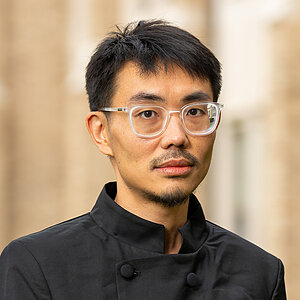
YuHao Chen — Music
YuHao Chen is a sound studies scholar whose research traces the interplay between sound-writing technology and embodiment in East Asia during the late 19th and early 20th centuries. He received his Ph.D. in music, with graduate certificates in Asian studies and cultural studies, from the University of Pittsburgh and, most recently, was a postdoctoral fellow in the Global Arts + Humanities Society of Fellows at The Ohio State University.
In the Department of Music, Chen plans to extend his doctoral research into various publications. His first book, tentatively titled “Phonographic Conversion,” aims to expand traditional views of sound recording by looking at phonetic reading systems as musical records in the context of early Chinese disability education. His second work, tentatively titled “Archives for the Unsound,” considers the role of silence in 19th-century Western perceptions of China.
“Taken together, my research addresses the overarching question of what it means to be human in the machine age during the late 19th and early 20th centuries,” he said.
A trained musician, Chen will work with mentor Berthold Hoeckner, the Keough-Hesburgh Professor of Music History, and he plans to engage with the Arts Initiative and the Visual Cultures Workshop Series.
“I am eager to initiate conversations around art-based methods for the humanities,” he said.

Mattlyn Cordova — Institute for Latino Studies
Mattlyn Cordova is an American studies scholar with a focus on film and digital studies, Latinx visual culture, affect theory, and brownness. Her research examines the role of digital technology in society’s understanding of racial and ethnic formations in the United States.
A Harvard University graduate, Cordova plans to expand on her dissertation, “Brown Belongings: Intimacy and Community Making in Twenty-First Century Latinx Digital Media,” into her first book manuscript. The book will explore the relationship between the formation of Latinidad and digital spectatorship and consider how digital distribution has enabled new forms of viewing and new modes of spectatorship that facilitate the creation of communities among dispersed spectators.
“Drawing from Latinx performance studies scholarship, I argue that recent technological and media shifts invite new forms of intimacies and identities, ones that illuminate a vibrant understanding of Latinx spectatorship and community,” said Cordova, who will join the Institute for Latino Studies (ILS). “This project will consider the use of virtual reality, specifically as a medium that asks viewers to become part of the image.”
Cordova will be mentored by ILS director Jason Ruiz, professor of American studies, and work closely with Anne García-Romero, professor of theatre and chair of the Department of Film, Television, and Theatre.
“This program appeals to me not only because of Notre Dame’s investment in the arts and humanities, as evidenced by the University-wide Arts Initiative,” Cordova said, “but also because of the vibrant community the Institute for Latino Studies offers.”
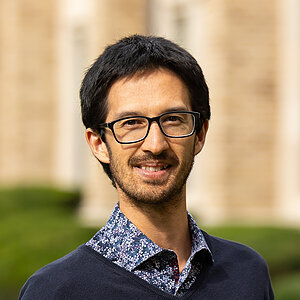
Stephen Mackereth — Philosophy
Previously a member of the Dartmouth Society of Fellows, Stephen Mackereth studies logic, philosophy of mathematics, and the history of analytic philosophy. He specifically researches the epistemological and conceptual structure of mathematics using the methods of mathematical logic.
“What is particularly delightful about this approach to the philosophy of mathematics is that it becomes possible to prove mathematical theorems that have significance for our philosophical understanding of mathematics as a whole,” Mackereth said. “These theorems belong to the tradition of metamathematics, or mathematics reflecting upon itself.”
Mackereth’s research interests stem from an effort to understand the great foundational debate in 20th-century mathematics between logicists and constructivists, as well as the effects of this debate on the subsequent development of analytic philosophy. He enjoys thinking about logical and semantic paradoxes; about the concepts of proof, truth, computation, and definition; and about the nature and significance of foundations in mathematics.
In the Department of Philosophy, Mackereth will be mentored by Joel David Hamkins, the John Cardinal O'Hara Professor of Logic. He plans to expand on topics he has written about, such as neo-Fregean logicism and Kurt Gödel’s Dialectica translation.

Oliver Silverman — Political Science
Political theorist Oliver Silverman aims to illuminate how classical political ideas emerged in explicit opposition to insurgent social-struggle practices. Silverman’s current project, “Profane Heaven: Apocalypse from Below and the Invention of Utopia,” offers a novel theory of utopia as both a political concept and a genre.
While utopian literature is commonly associated with egalitarianism and the imagination of communitarian alternatives, Silverman argues that the first English utopian works — by Thomas More, Francis Bacon, and James Harrington — were elite reactions to popular rebellions. Silverman further argues that the idea of utopia appeared as a secular version of heaven, an always-elsewhere good place, that delegitimized struggles for real equality on Earth.
“Reading classic works of political theory in the context of the popular uprisings that unfolded as they were written, I demonstrate that one of the most classic ideas in the history of political thought, utopia, is a product of both philosophical and political repressions of revolutionary movements,” Silverman said.
Silverman completed a Ph.D. at The Graduate Center, City University of New York (CUNY) and has been published in journals such as Political Theory, History of the Present, Utopian Studies, and Theory & Event. Silverman will work closely with mentor Mary Keys, professor in the Department of Political Science.
Originally published by at al.nd.edu on September 28, 2026.