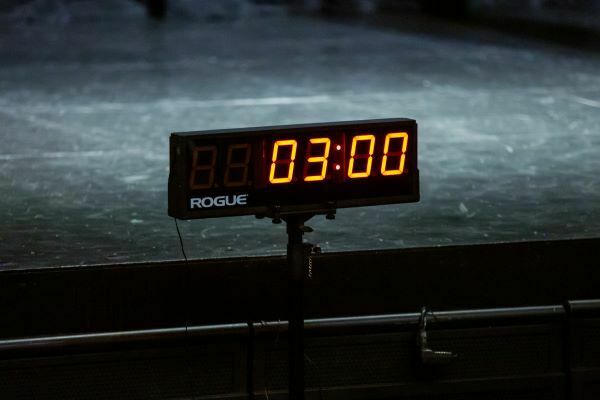
The lights dimmed inside Decio Theatre at the DeBartolo Performing Arts Center. The crowd quieted. The stage was sparse—a single screen, a countdown clock, and a banner. Attendees filled the main floor and spilled into the balcony, forming the largest audience in the history of the Shaheen Three-Minute Thesis (3MT®) Finals at Notre Dame. This was no ordinary competition. Celebrating its 10th anniversary, the 2026 finals brought graduate students to one of the most striking stages on campus to present their years of research in just three minutes.
There was an air of excitement, anticipation, and nervous energy. It was the kind of night that pushes even the most confident researchers out of their comfort zone. One by one, the 12 finalists stepped into the spotlight. They represented the Colleges of Arts & Letters, Engineering, and Science; the Mendoza College of Business; and the Keough School of Global Affairs.
During her introduction, Mary Ann McDowell, associate dean for professional development, explained how vital it is for researchers to "be able to communicate the importance of their work clearly, concisely, and passionately to a diverse audience." And she added, "Truthfully, I think the last 10 years have shown us we haven't done a very good job of that."
That challenge is exactly why 3MT matters.
Competitors have just three minutes and one static slide. Exceed the time limit, and they face automatic disqualification. Judges evaluate each presentation on the clarity of the research explanation, the effectiveness of the visual slide, and the broader impact of the work.
The range of topics was striking. Finalists presented on adaptive robotics designed to operate across varied environments and on how artificial intelligence systems might become more powerful if they could better interpret their surroundings.
Others tackled complex global issues—strengthening biodiversity policy, addressing antibiotic resistance, and examining whether exposure to toxic video game chat increases toxic behavior in subsequent play.
Health innovations were also front and center, including research examining whether a smartwatch could detect and intervene during acute mental health crises, potentially preventing suicide, alongside studies exploring diagnostic testing through breath rather than blood.
2026 3MT Winner: Marialena Bevilacqua

The 2026 3MT winner was Marialena Bevilacqua, who made history as the first winner ever from the Mendoza College of Business. In her presentation, "Preserving the Human in Humanitarian: The Effects of Artificial Intelligence on Donations to Humanitarian Organizations," she asked a critical question: As humanitarian organizations invest in innovation to combat decreased funding, are they risking the humanity that inspires generosity? Bevilacqua’s research demonstrates that replacing human roles with AI creates a perceived "mission alignment gap," with donors viewing AI as competent but emotionally distant—a shift associated with a 39% drop in donor participation.
Bevilacqua, a Ph.D. candidate in IT, Analytics and Operations, entered the competition to prepare for the job market this upcoming fall, wanting to further refine how she presents her research. It definitely took her out of her comfort zone. "I can present for 75 minutes to a room full of people in my department, and I feel fine doing that," Bevilacqua pointed out, "But presenting in 3 minutes was actually more pressure. It was very hard." She was surprised by her win, "I'm very surprised, but I'm so happy. And I feel honored to represent Mendoza in this competition."
And perhaps as meaningful, the experience reshaped how she sees her work.
"I was always skeptical of the impact of my research," she said. "Through this process, I realized that my research does have a tangible impact—and being at a place like Notre Dame allows me to pursue research that does just that. This journey was truly a great learning experience."
The $2,500 prize money was a bonus. Bevilacqua recently got engaged and says that will go toward her wedding.
2026 3MT Runner-Up: Gabriela Padilla Marrero
The runner-up, Gabriela Padilla Marrero, a post-baccalaureate scholar in the ASPIRE-ND program, presented "The Sticky Situation: Unlocking the Secret of Leishmania Survival Inside the Sand Fly."

Padilla Marrero examined the deadly parasite that causes leishmaniasis, a disease affecting roughly 1 million people each year. By studying how the parasite adheres to the sand fly's gut—potentially through sticky proteins known as mucins—she hopes to disrupt the transmission cycle and lay the groundwork for future vaccines.
The competition also strengthened her confidence as a communicator.
"I am very passionate about science communication. I think it's essential to bridge the gap between the scientific community and the general public," Padilla Marrero shared. "This was a good opportunity for me to exercise that and know that I'm taking a step in the right direction because my work was seen as accessible."
As second runner-up, she received $2,000—though she was arguably more excited about the oversized ceremonial check. “I mean, it’s amazing, first of all," Padilla Marrero said. "A giant check. It’s going right on my wall. A decoration.”
2026 3MT People's Choice Award: Joash Lau
Finally, the People's Choice Award went to Joash Lau for his presentation, "Capturing a Brighter Future," which blended complex chemistry with well-timed humor.

Lau says he is drawn to the idea of "combining science and art, finding a way to make something mundane to other people, interesting." This competition allowed him to do just that. In his presentation, Lau demonstrated how encircling flexible fluorescent dyes with larger molecular rings enhances their brightness for medical imaging. He earned the biggest laugh of the night when he quipped, "Much like in real life, putting on a ring greatly restricts one's freedom. But before you call off your engagement, what might seem like an unnecessary restriction leads to a dramatic enhancement in brightness.”
"It's an honor to get the People's Choice Award," Lau said. "I have some people coming up to me saying, 'Oh, I laughed at your jokes.' I like that I can connect with people through jokes. I hope the jokes can make my research a little more understandable."
Lau received $1,500, which he may use for a new suit for professional events or perhaps toward his graduation regalia this spring.
Beyond the Awards
Even finalists who did not take home a title found the competition very rewarding. Finalist Amio Ritwik, who studies aerospace and mechanical engineering, says he genuinely enjoyed every second of the experience.
"I entered the preliminary round fully prepared to be eliminated in the first stage,” Ritwik said. But once I made it through, I realized how much joy I actually found in sharing my research, and how engaging it can be for others. For me, this was a great opportunity to step outside my comfort zone, practice communicating science, and genuinely enjoy the experience."
Additional 2026 3MT Finalists Included:
- Nnamdi Chikere, Electrical Engineering
- Mariana Fernandez Espinosa, Computer Science and Engineering
- Ignacio Guarachi Cando, Global Affairs
- Jonathan Karr, Theology
- Anne Knorr, Psychology
- Ana-Teresa Mendoza, Chemistry & Biochemistry
- Fr. Emmanuel Ojeifo, Theology
- Sunan Qian, IT, Analytics, and Operations
- Amio Ritwik, Aerospace and Mechanical Engineering
In reflecting on the night, Mary Ann McDowell emphasized just how far the competition has come. "The 10th annual Three-Minute Thesis competition was a resounding success," she said. "With a record-breaking crowd of 250 attendees, the event continues to grow in both scale and impact each year. The presentations were truly exceptional, showcasing the world-class graduate research taking place here at Notre Dame. I am incredibly proud of our students' hard work and brilliance. Huge congratulations to everyone who took the stage."
Ten years after it first appeared on campus, 3MT continues to challenge researchers to communicate clearly, concisely, and passionately—because when research is shared boldly and accessibly, it does more than inform. It matters. See more pictures from the event in this picture gallery.
Gallery